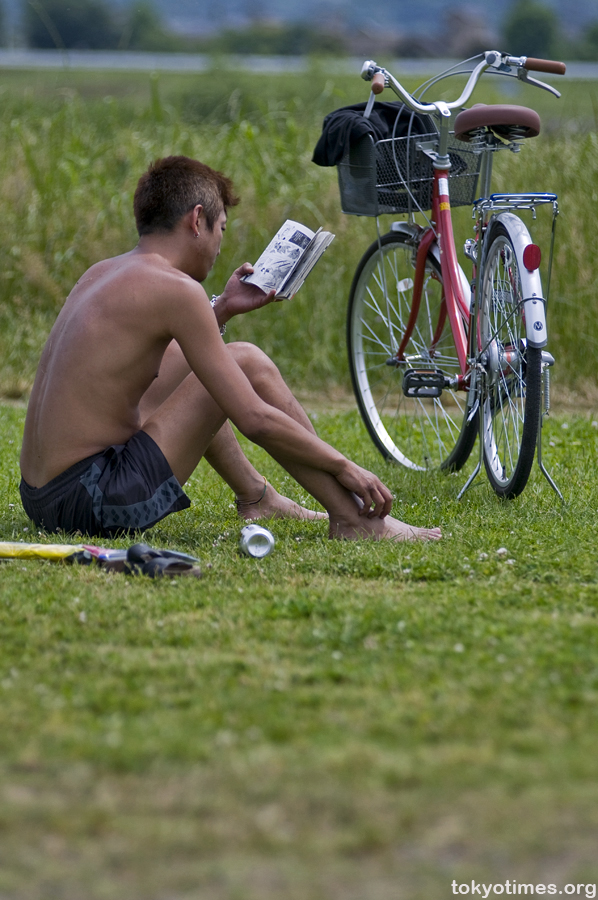
A suitable spot for a read along with a rest in the sun. And, mercifully, the man in question doesn’t have moobs the size of most of the mammaries found in manga.
Photographs from a small group of islands
A suitable spot for a read along with a rest in the sun. And, mercifully, the man in question doesn’t have moobs the size of most of the mammaries found in manga.
There is almost always talk about the likes of television and technology having a really terrible effect on the amount teenagers read; however, whilst there may well be a certain amount of truth in such suggestions, at least when it comes to manga, reading is nothing short of a requirement, with no opportunity for a perusal to be passed up.
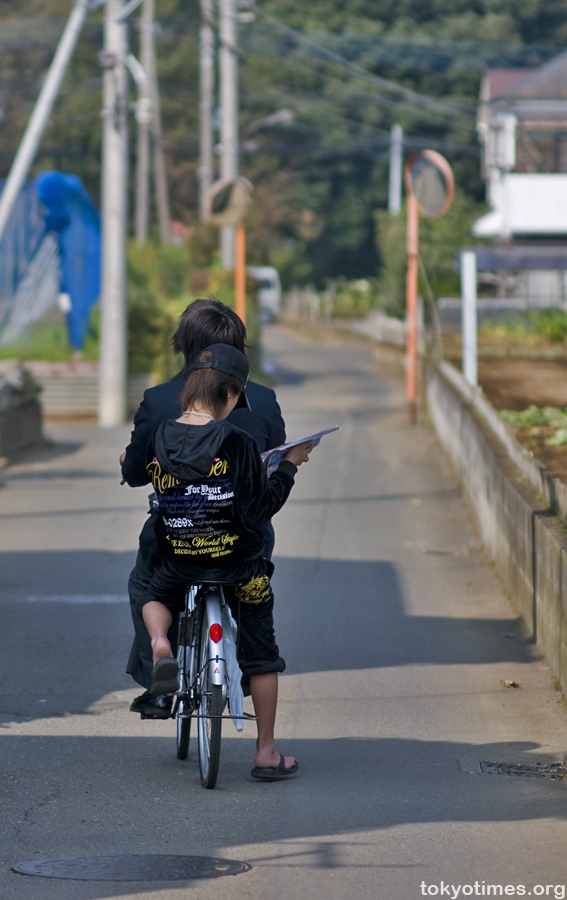
Ever.
There are countless books about Japan, but for my money at least, Alan Booth’s The Roads to Sata is up there with the best of them. A meander through Japan that may well be touted as a travel book but in reality is a terrifically honest and informative account of life in Japan, along with its people and places — both good and bad.
Yet with all these publications covering Japan as a whole, there’s also no shortage of books dealing with specific niches or novelties. The former at least a category that Wayne Lionel Aponte’s The Year of No Money in Tokyo arguably falls into.
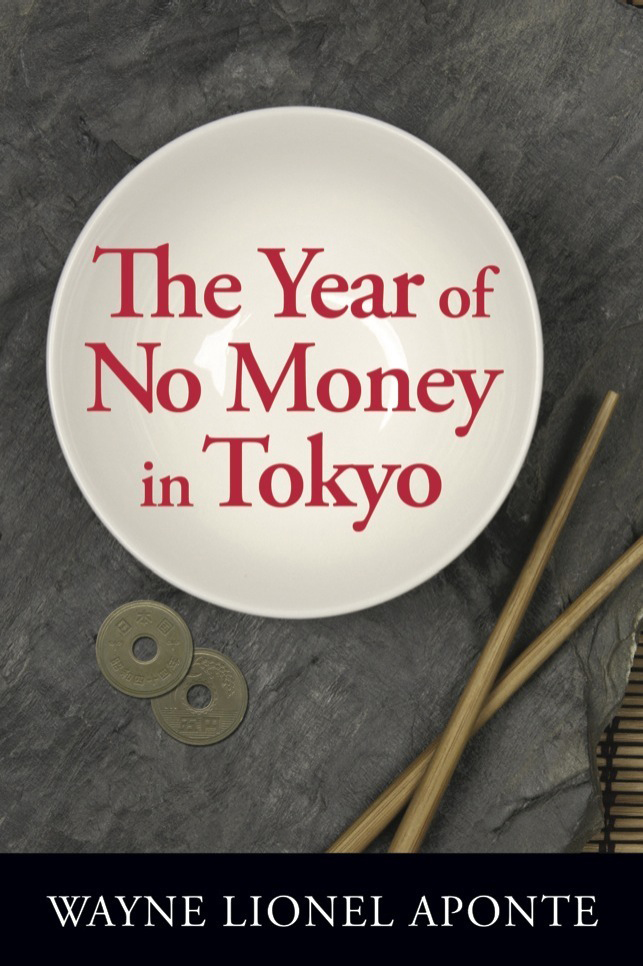
And given the current economic climate, it’s a timely arrival, considering the author’s story covers his year of abject poverty and unemployment during Japan’s last financial crisis in the mid 1990’s. A period that saw him live hand-to-mouth, in cramped and uncomfortable conditions, on the handouts from his numerous girlfriends. An especially unpleasant experience that eventually bottomed out with a brief spell behind bars for brawling after one too many beers.
With this in mind, it’s not a jolly romp by any stretch of the imagination, and there’s no shortage of the writer railing against Japanese society’s injustices — real or imagined. An aspect of life in Japan that any foreign resident will be able to relate to, although even for a far from overly buoyant Brit, some of the author’s complaints about a myriad of perceived issues can get a little overwhelming.
That said, the eventual arrival of employment helps herald a new outlook, and not just one based around Japan, which gives the book some much needed balance, allowing a look at life in Tokyo that deals with both the positive and the negative. A transformation that obviously wasn’t a temporary one either, as nearly a decade and a half down the line, Aponte is still living — and working — in Tokyo. Plus, as a white fella from England, the book also offers a view of Tokyo I’m not accustomed to — one seen through the eyes of an African-American.
But going back to the beginning and The Roads to Sata, it has to be said that The Year of No Money in Tokyo doesn’t reach the dizzy heights of Booth’s wonderfully enlightening walk, although at the same time it still offers both a unique and interesting look at life lived on the breadline in Tokyo. A topic that is very rarely touched upon, let alone tackled.
Even though it’s by no means unusual.
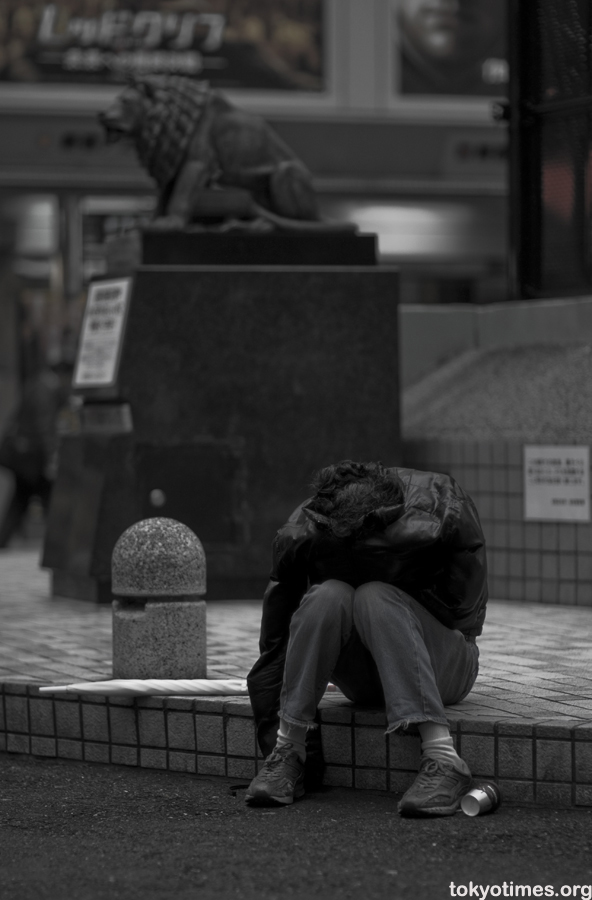
Not by a long shot.
How much money Tokyo’s relatively numerous roadside manga sellers make is debatable to say the least, but it certainly can’t be a lot.
However, that said, insubstantial salary aside, it’s a livelihood that at least allows for a lot of reading on the job, along with a massive amount of material to boot.
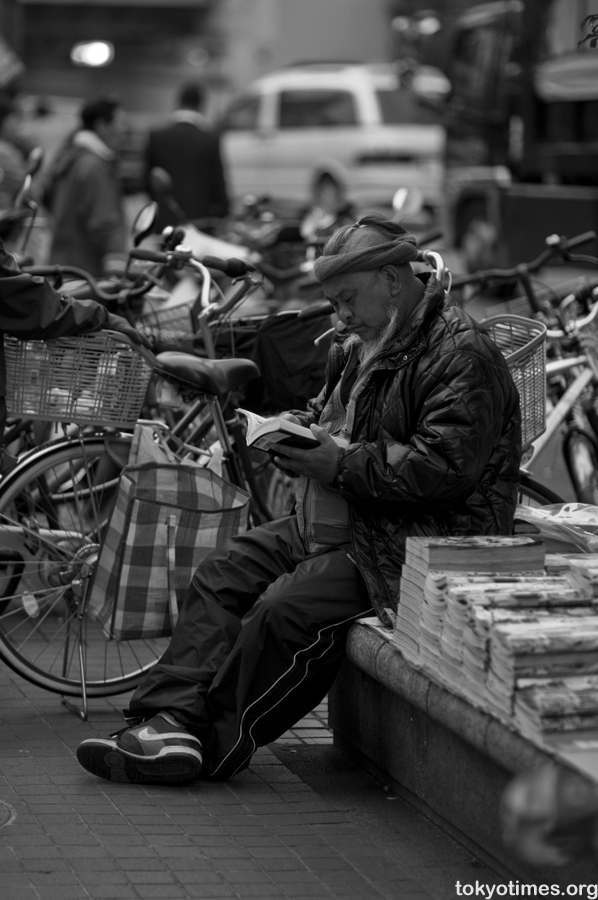
Plus, as smoking becomes ever more marginalised, there’s no trouble at all when it comes to taking tobacco-based treats, with possibly the only frustration apart from financial being the odd funny looking foreigner faffing about taking photos.

The library may well have once been the location of learning for many, but with the likes of video games and the internet vying for the average Tokyo teen’s time, any reason to bother with books is rapidly receding, resulting in increasingly radical attempts to reel in reticent readers.
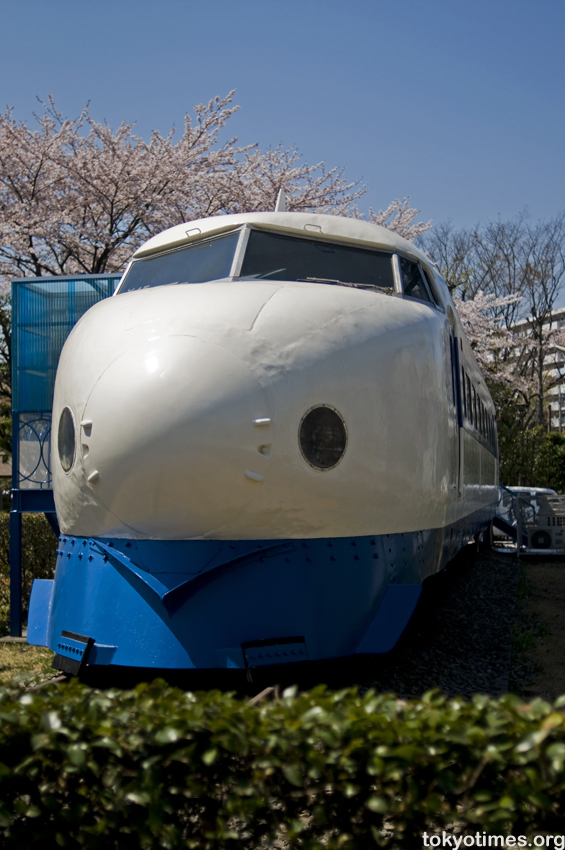
But, while bullet train buildings bulging with books may well recruit a reasonable number of people to the unrivalled pleasures of reading,
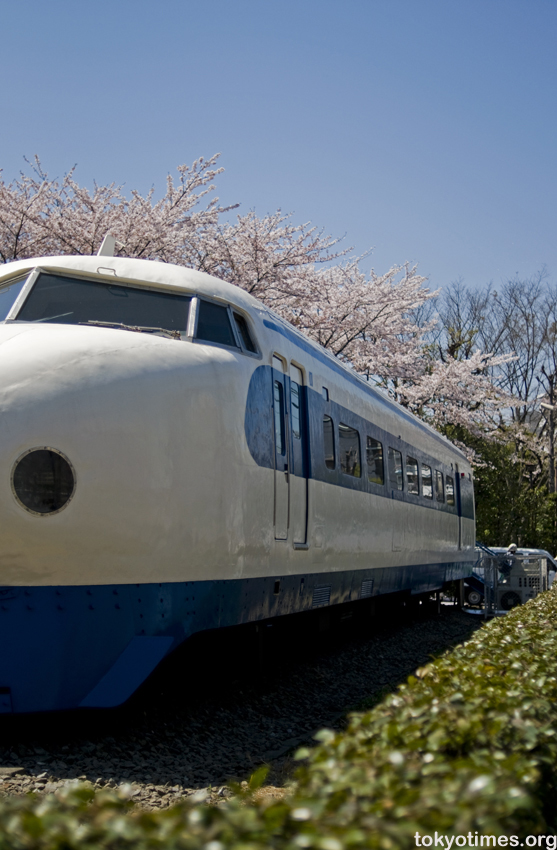
it’s probably more than likely that such a locomotive-based library will instead turn these tots into timetable toting train otaku,
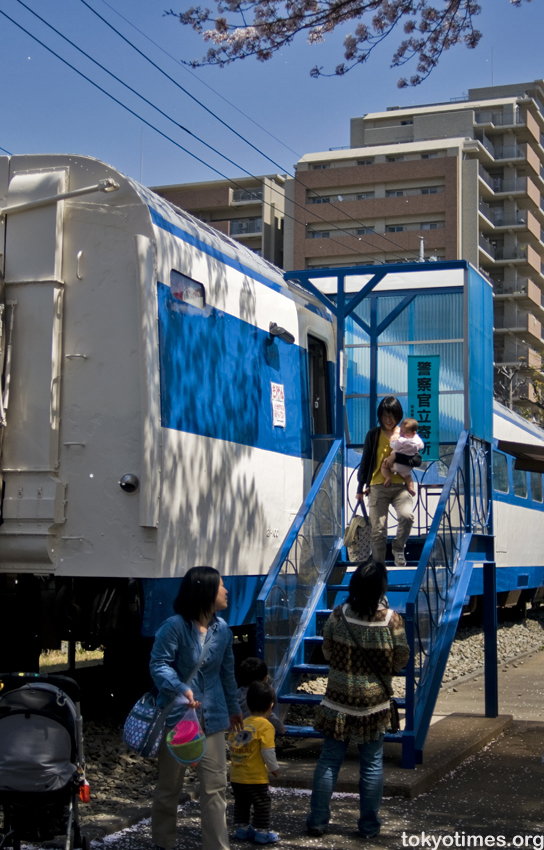
rather than testing tome tacklers.
