Dolls feature fairly prominently in Japanese culture, from the ornamental hina ningyo of Girls’ Day (Hinamatsuri), to kokeshi, a popular souvenir. An importance that, along with the kanji for doll literally meaning ‘human form’, means they are very often treated differently than regular toys or ornaments.
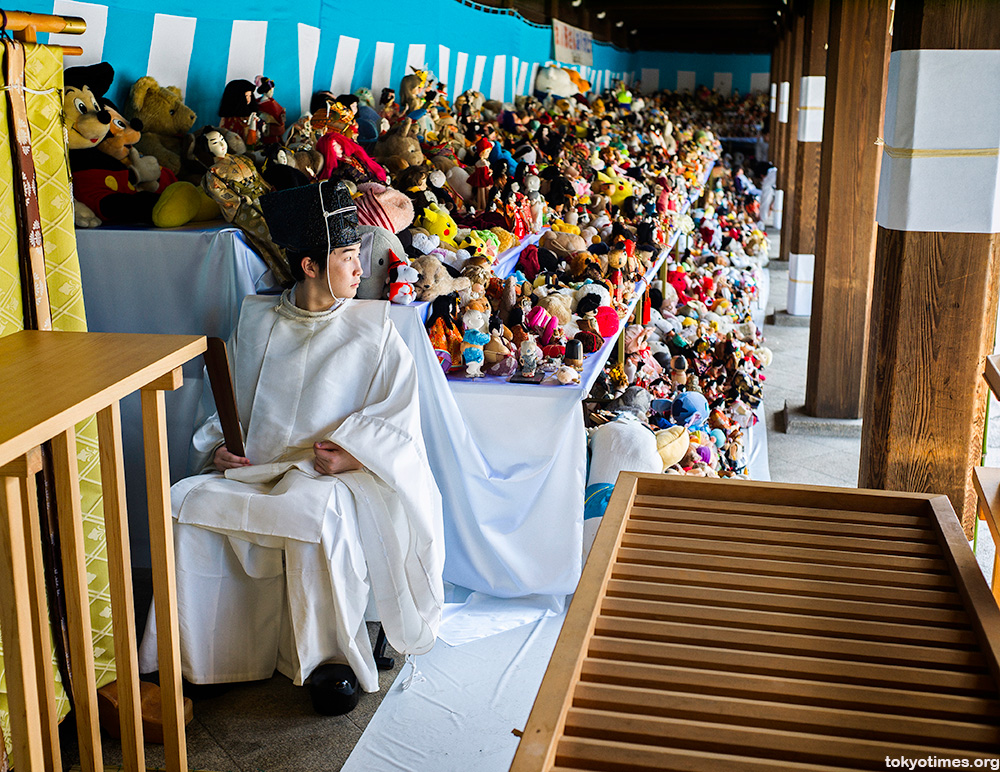
Being a part of the family for years, as well as an integral element of a child’s upbringing, it is thought by some that dolls hold memories, or even have souls. As such, disposing of them can be very difficult, with many people feeling incapable of simply throwing them away — even believing there’ll be spiritual repercussions of some sort if they do. So ceremonies like ningyo kuyo — a kind of doll funeral — help owners say goodbye in a more dignified way. Prayers will be said. The dolls will be purified. And then the shrine or temple will deal with the disposal.
An event that makes for a slightly odd sight, as thousands of old companions and former family treasures are brought, displayed one last time, and then rather touchingly said goodbye to.