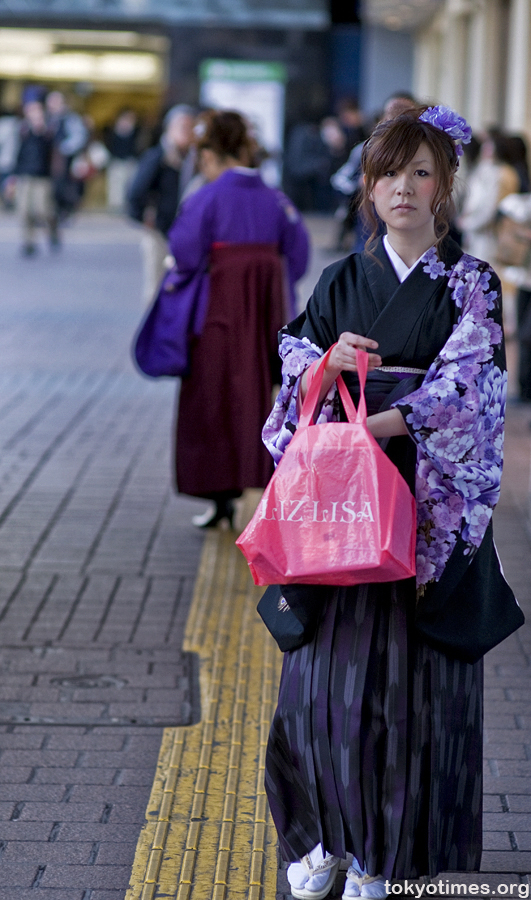
In Shibuya, where feisty is a fairly good word to describe the fashion, and also the way some folk show their feelings, it makes a nice change, as well as quite a contrast, to see togs of a much more traditional nature.
Photographs from a small group of islands
In Shibuya, where feisty is a fairly good word to describe the fashion, and also the way some folk show their feelings, it makes a nice change, as well as quite a contrast, to see togs of a much more traditional nature.
The vague and almost wholly personal appreciation of what is, or indeed what isn’t, wabi-sabi, was perfectly (or should that be imperfectly?) played out in my previous post on the topic, with its definition much more down to the individual rather than any particular directive.
On the whole, however, the images I offered were considered a little too much on the stark side to attain true wabi-sabi status, so, with this in mind, here’s another attempt at this wonderfully hard to nail down notion.

Which inevitably begs the question, is it wabi-sabi, or once again am I way off?
When it comes to entertainment, Tokyo arguably offers more than what’s manageable — sometimes even what’s unimaginable; however, more often than not such activities require cash, and quite often considerable amounts of it too.
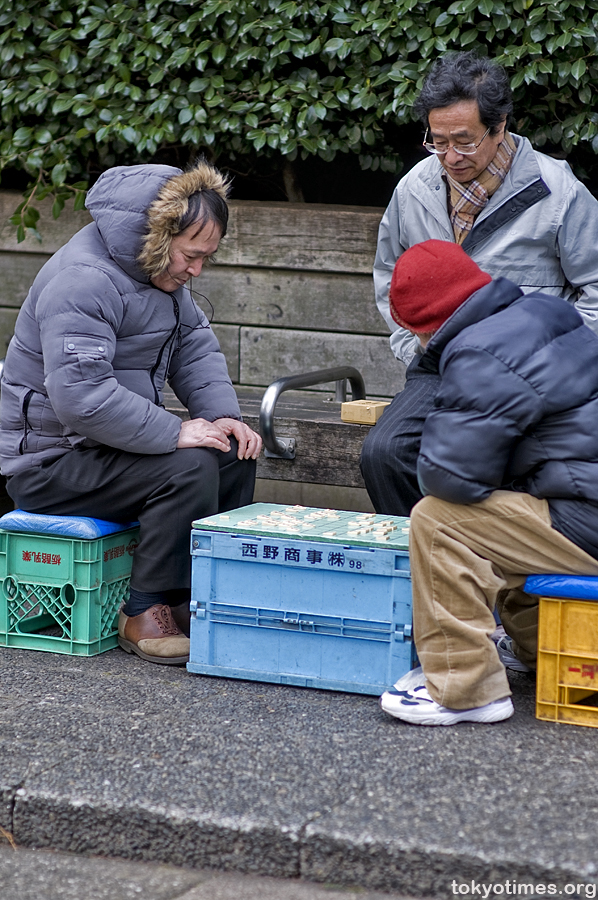
But that said, there are alternatives, and whilst a calming and yet competitive game of shogi in the park may well be cold, it costs next to nothing.

Which for some may well be seen as essential.
Quite what titbits of the future this fella may have detected with his torch is unclear, but more than likely it will have involved something along the lines of a long and happy life, an equally marvellous marriage and conceivably even a kid or two.

After no doubt attending a Coming of Age Day (æˆäººã®æ—¥ Seijin no Hi) ceremony of some kind or another, this young woman waits patiently to head off down the tracks and begin to do the things that adults do.
The dawning prospect of which is understandably not something to smile about.
