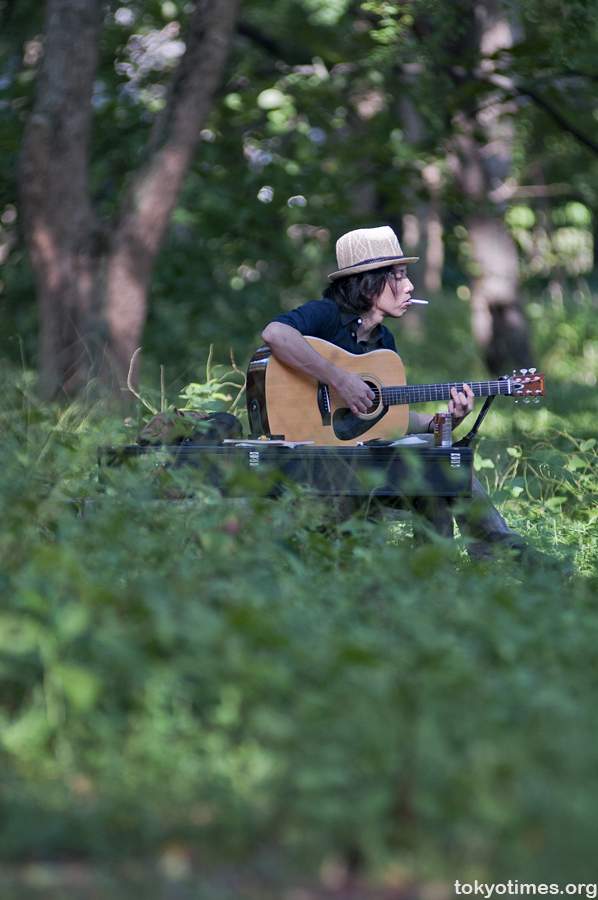
He certainly has the looks.
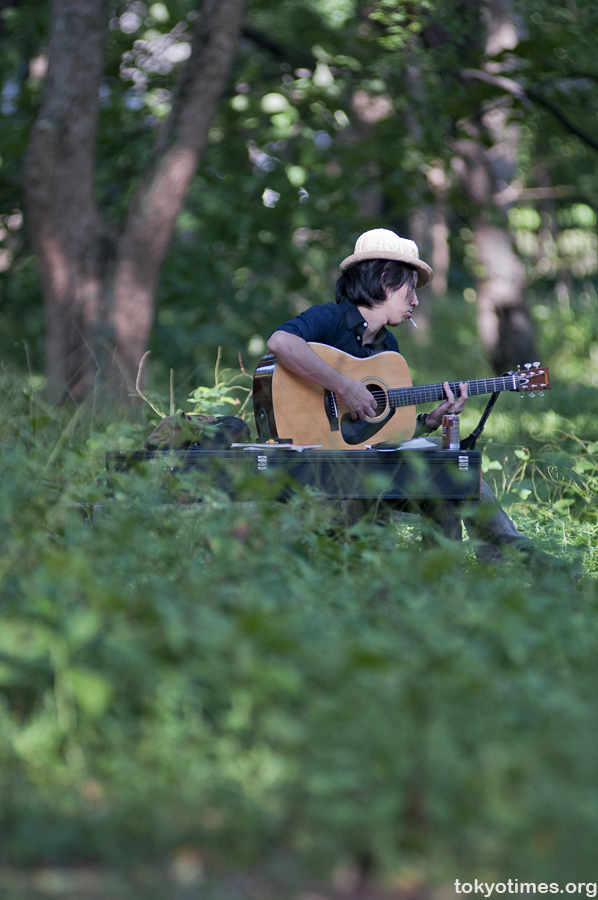
Most definitely the moves.
And from a brief sound of it, the ability.
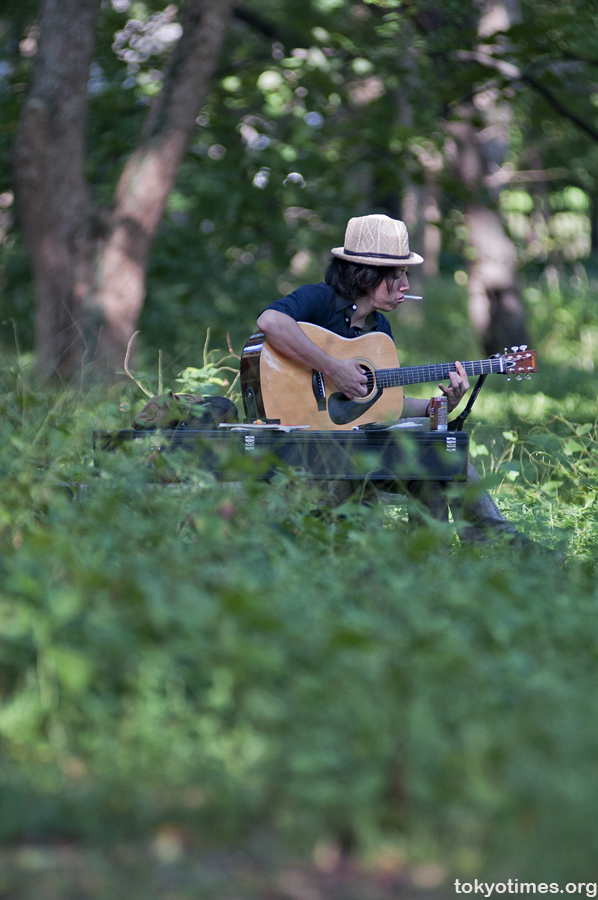
But whether he’ll ever be big in his mother country and end up bigging it up at the Budokan, remains to be seen.
Photographs from a small group of islands
He certainly has the looks.
Most definitely the moves.
And from a brief sound of it, the ability.
But whether he’ll ever be big in his mother country and end up bigging it up at the Budokan, remains to be seen.
Urban exploration undoubtedly means different things to different people, but for me personally, visiting an abandoned building/haikyo is all about what’s been left behind rather than the actual building itself. Well, apart from a few very special cases that is; namely Kawatana Suicide Squad Training Centre, Mount Asama Volcano Museum, and the recently posted Joyo Pachinko Parlor. All of which were incredibly interesting simply as structures, and/or what they stood for.
But that said, they really aren’t the kinds of places I would initially seek out when searching for a new haikyo to visit; this small and sad-looking house on the other hand, is.
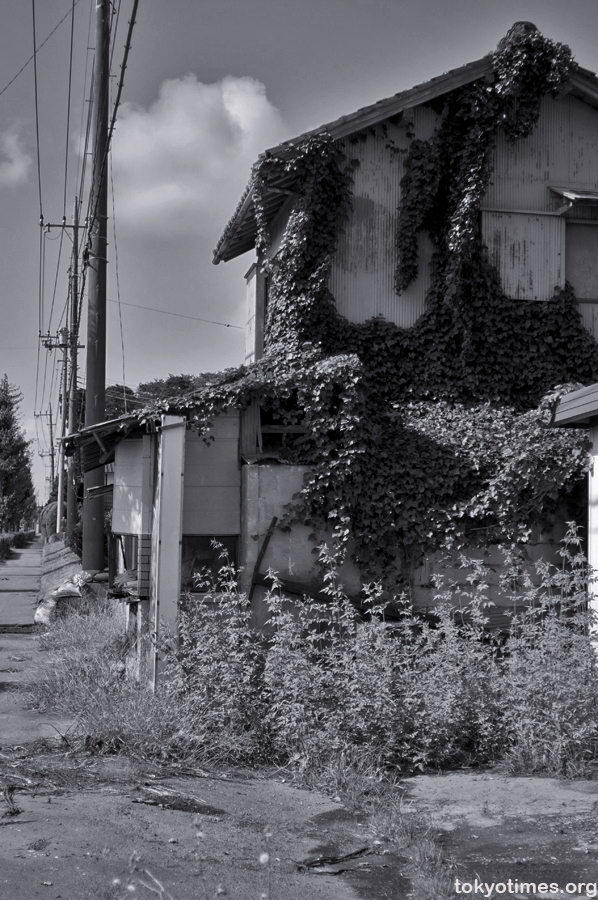
A chance find that, as soon as we walked through the unlocked door, felt like entering someone’s life. Or at least past life. Particularly as there on display was a picture of the one-time occupant himself.
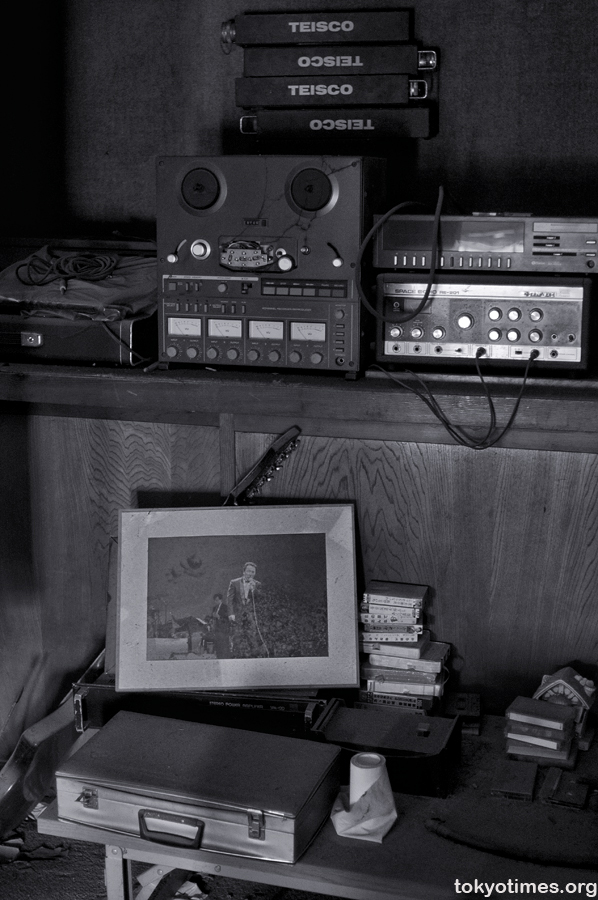
Plus, due to a certificate of thanks on the wall, it was possible to find out his name, Shouji Masakatsu, and that in 1985 he was a singer on the inaugural journey of the Varuna ferry; its three day trip taking them from Oarai in Ibaraki, to Muroran in Hokkaido.
A vessel that, just like the man who once performed on it, has now moved on, but as it was sold to a Greek tour company, it could still be operating somewhere in the Aegean Sea, although it presumably sails to the sound of very different songs. And in regards to music, lyrics for some of the ballads that could well have been part of Masakatsu’s set on the Varuna all those years ago, are still in the house — all carefully copied out.
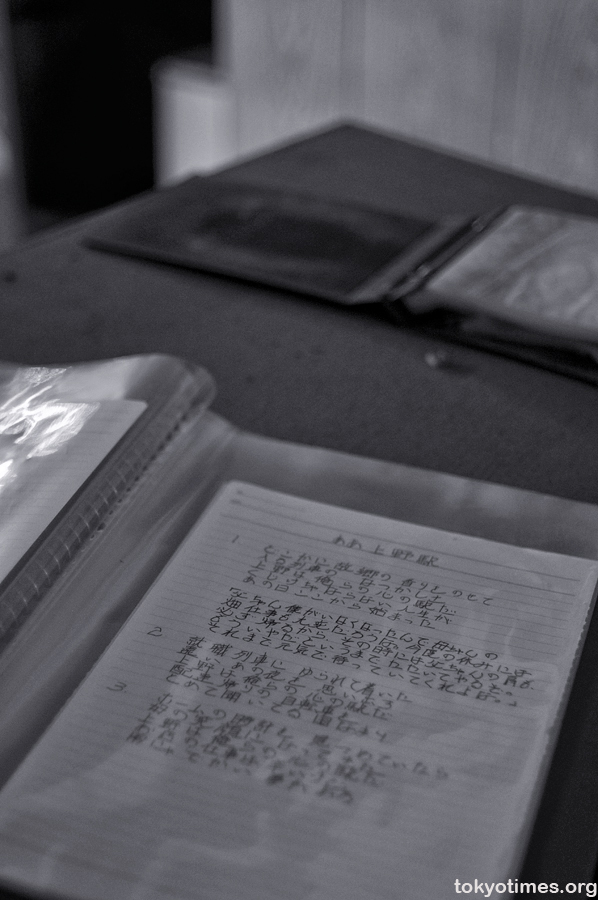
And a version of one of them, sung by somebody else, can be heard here:
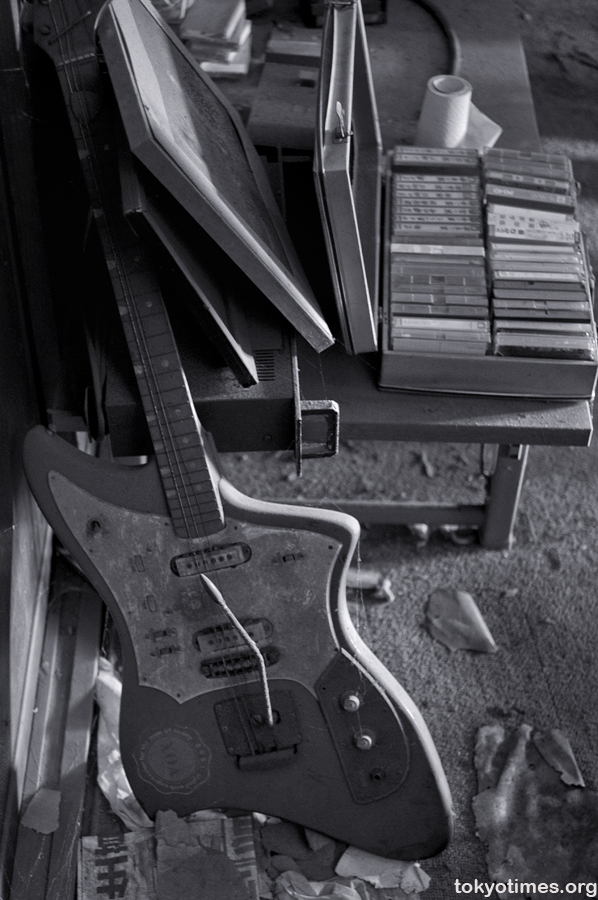
But boats aside, music was obviously not only Masakatsu-san’s livelihood, but also his love, as the house is still packed with an assorted array of instruments,

gear,

and mementos.

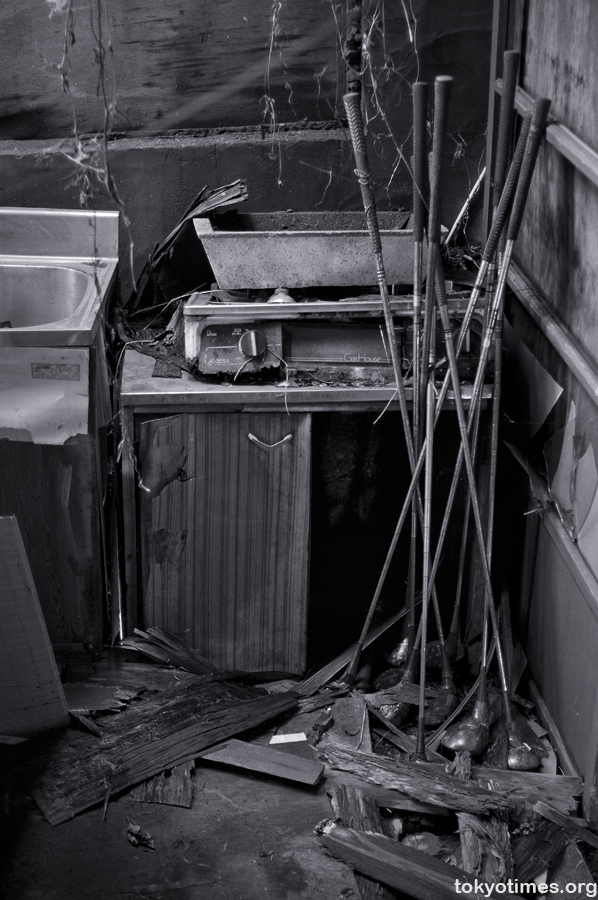
Along with the suggestion that he may also have liked golf, but quite possibly didn’t really care for cooking.
It was a very similar story upstairs too, although several more personal items made the man’s presence almost palpable.
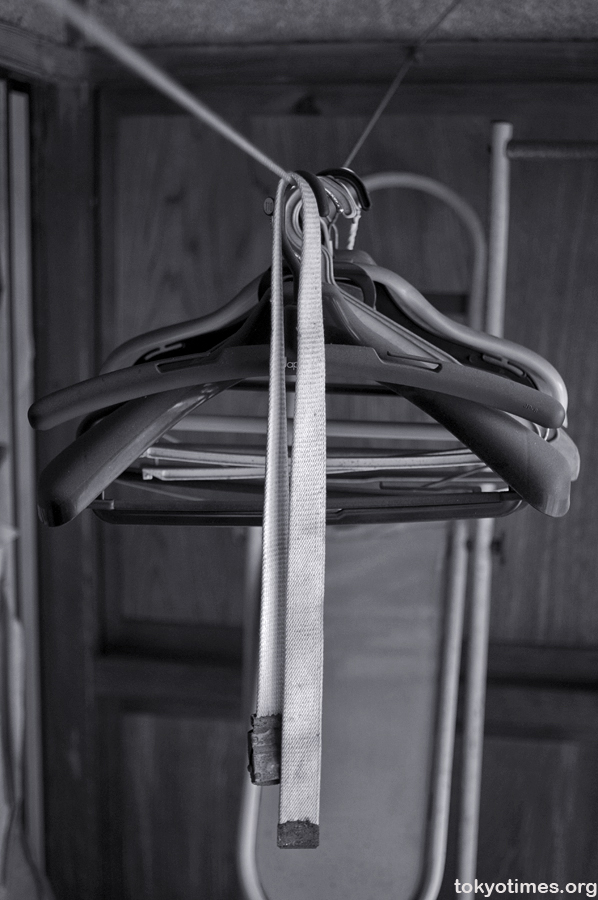
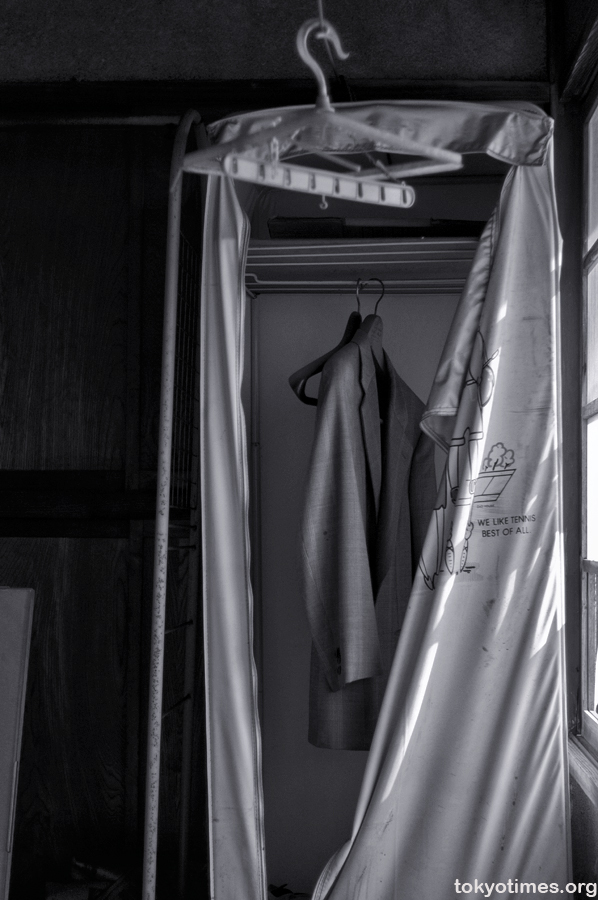
Especially with his jacket still waiting in the wardrobe.
And music was again a big theme, with an old school cassette player,

and a radio alarm clock still in the bedroom.
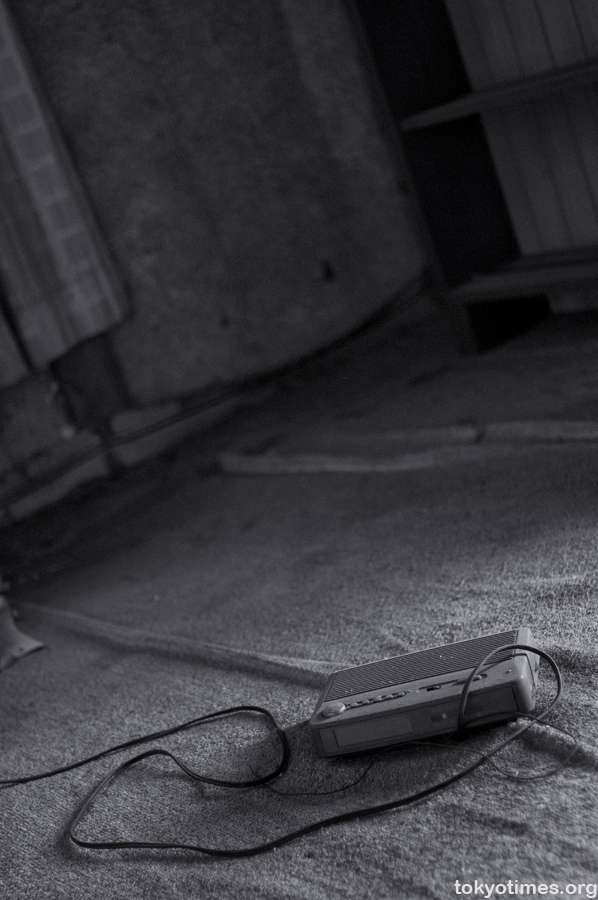
A room that was not only bleak, but also contained a newspaper dated 1997, suggesting that was the last time Shouji Masakatsu spent a night there.

But why he left, and more pressingly also left so many possessions, is a mystery. The selection of which made the deathly quiet of the house almost deafening.
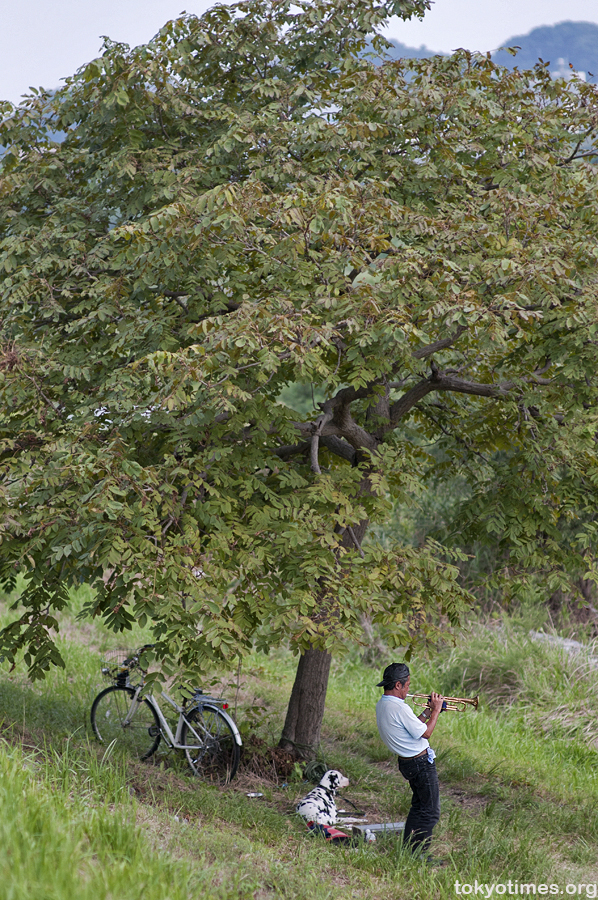
Regardless of whether the fella below lives in a house or an apartment, it’s perfectly understandable that, no matter what the time, or whatever day it is, his neighbours don’t want to hear even the tiniest of toots from his trumpet.
By the river, on the other hand, he can happily toot away to his heart’s content. Or at least for as long as his dalmatian can deal with it.
Whether low-key or nationally lauded, Japanese festivals are always a lot of fun — events where one can enjoy a variety of sights and sounds as well as fill up on a dazzling array of food and drink.
However, arguably more interesting are the actual people participating; a fascinating array of faces that suggest something, and yet at the same time nothing, about their owners.
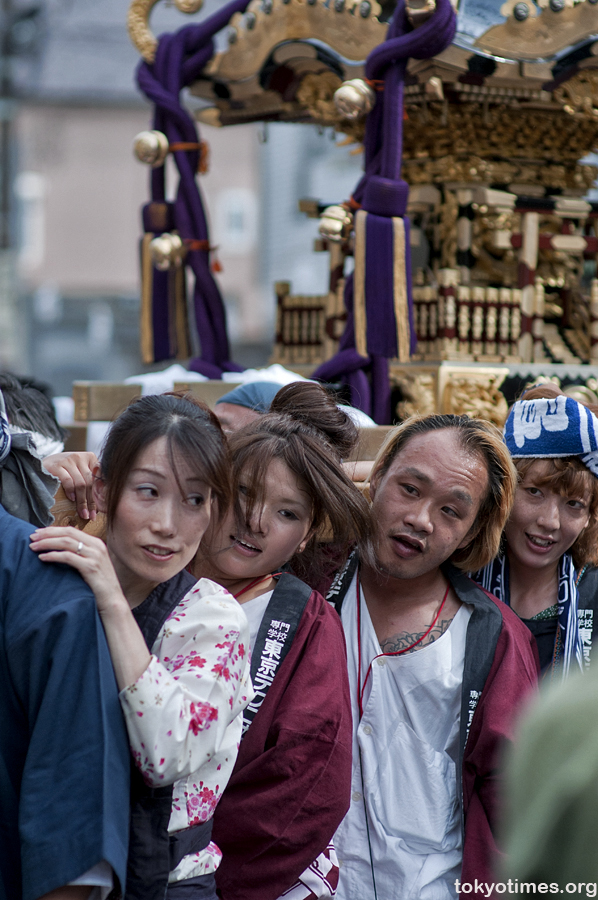
All the time begging the question: Are these really the same suited and staid salaried workers that come Monday morning will be crammed into a carriage like millions of other commuters? Or alternatively, do they include the likes of Mr and Mrs Sato who run the little restaurant down the road, or maybe Baba-san the local builder?
But whatever work they do, or regardless of what kind of lives they lead, come festival time the whole lot is left behind.
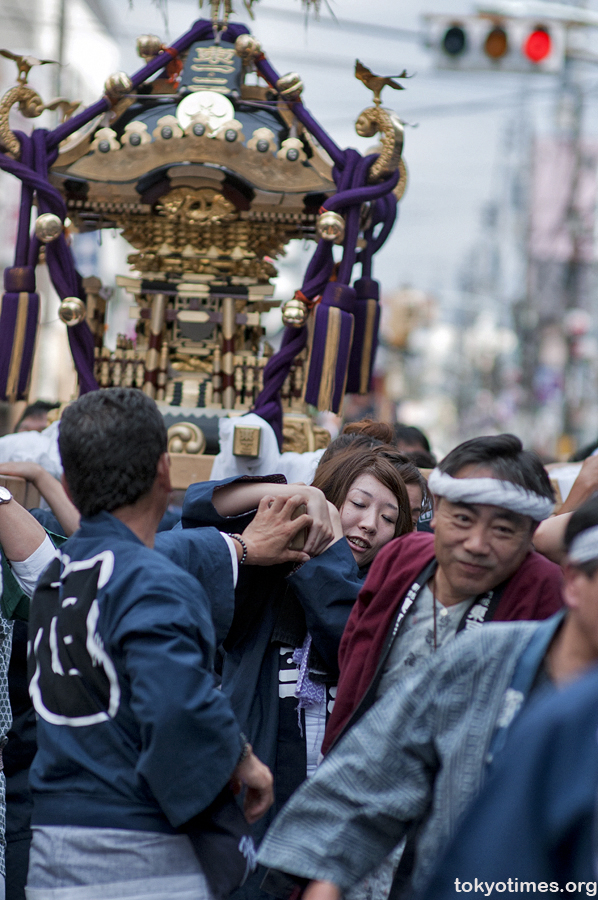
And instead, amidst the din of the drums:
It’s time for geniality.
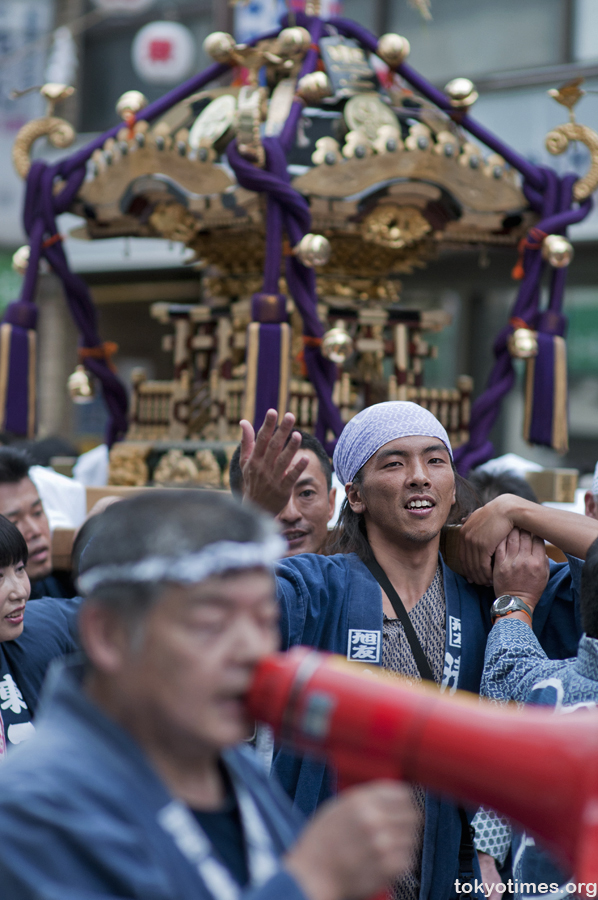
Joy.
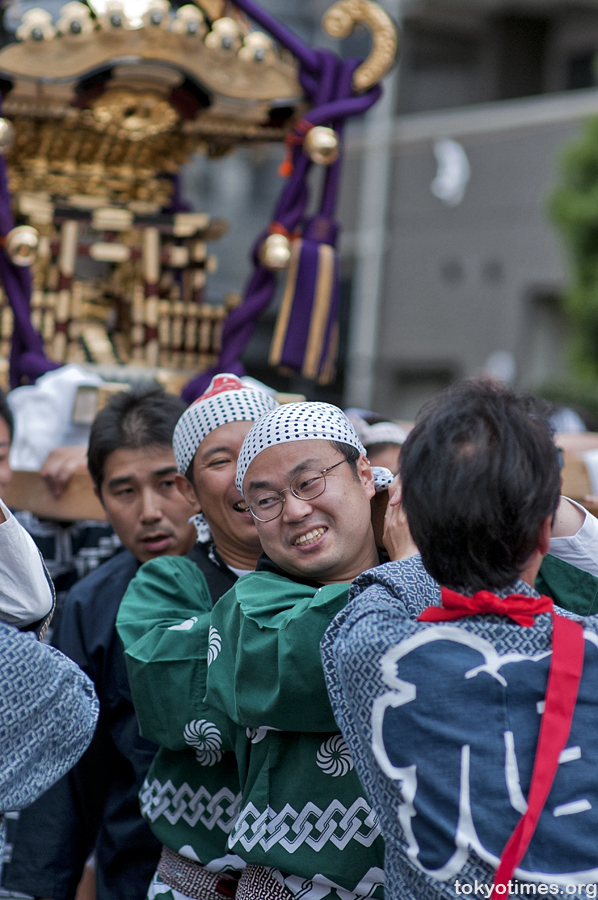
Jubilation.
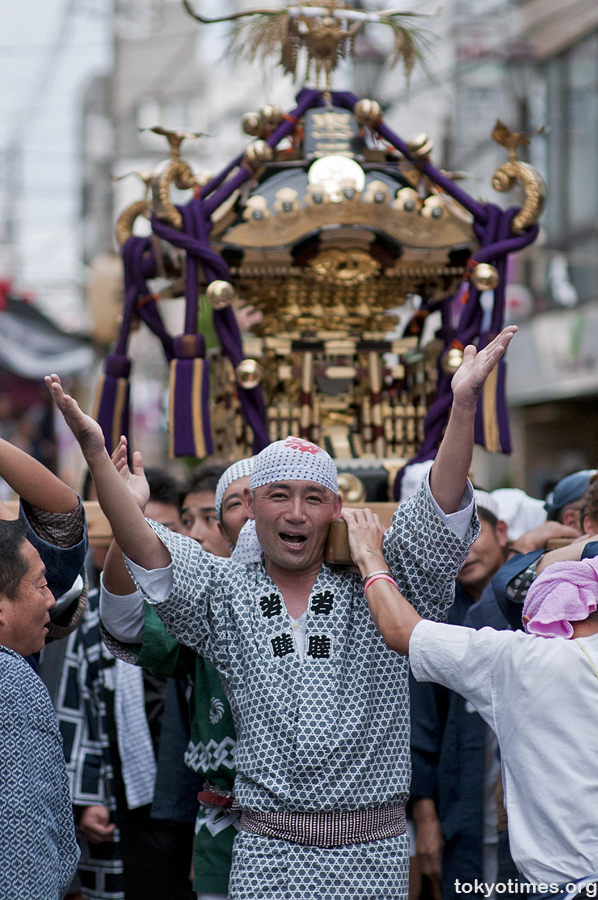
And sometimes just jolliness.

Plus, for those who have seen it so many times before, it’s a chance, for most of them at least,
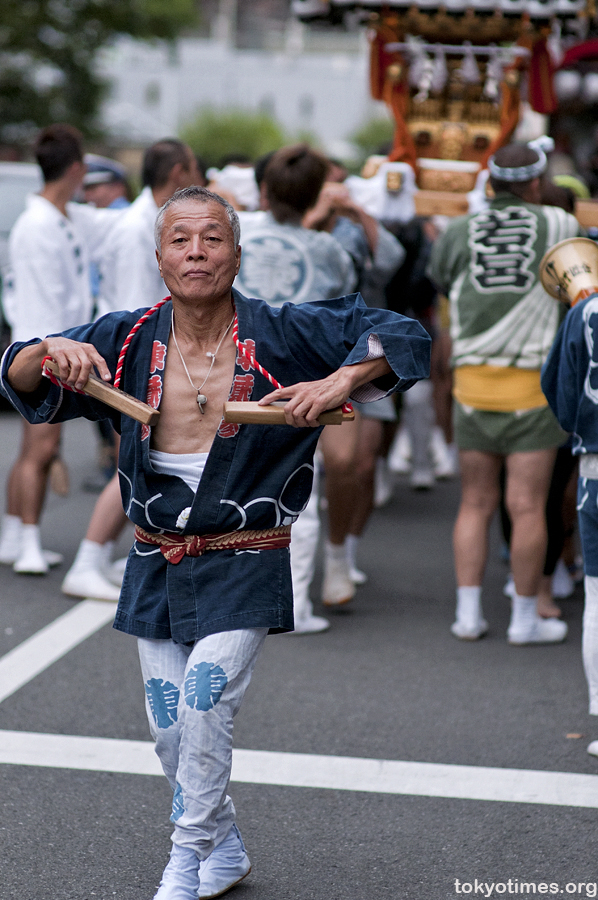
to enjoy a much more leisurely experience.
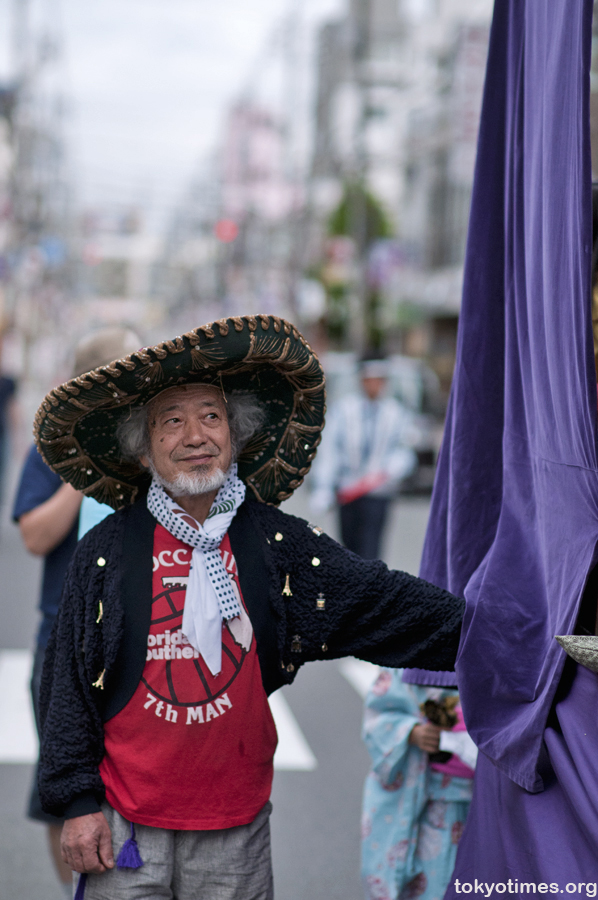
One that involves noticeably more looking,

than lifting.
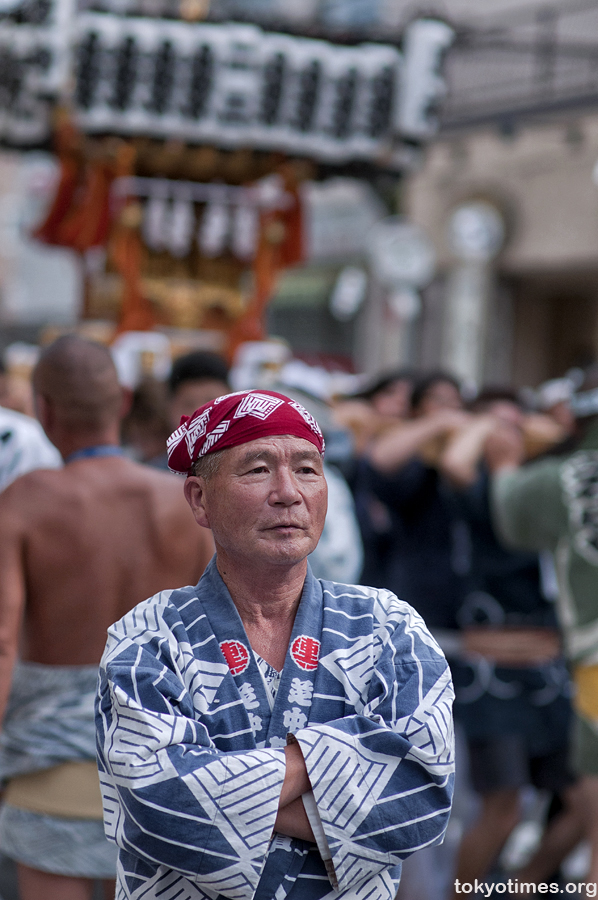
But, in no time at all, it’s over, with nothing left to do but savour the last of the sounds,
then walk back to wherever it is they come from, and whatever it is they do.

After more than ten years in Tokyo, and even though coming across one really isn’t that uncommon, the sight of a kimono is still something quite special: a window to another world perhaps, or at least a glimpse into one that has long since gone.
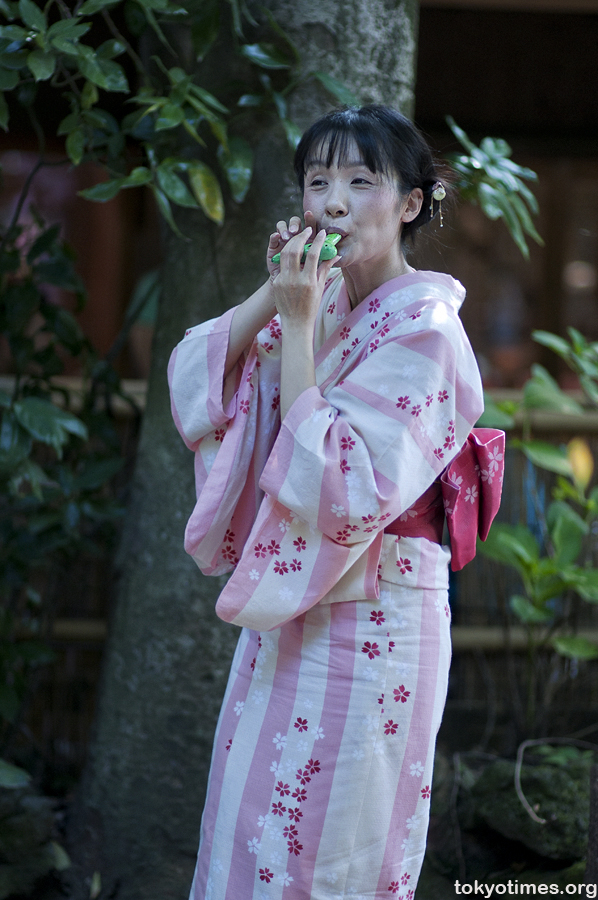
Kimono and ocarina combinations on the other hand are considerably less common.

The surprising sight and sound of which was not only pleasing for those passing by.
But also the immaculately clothed player herself.