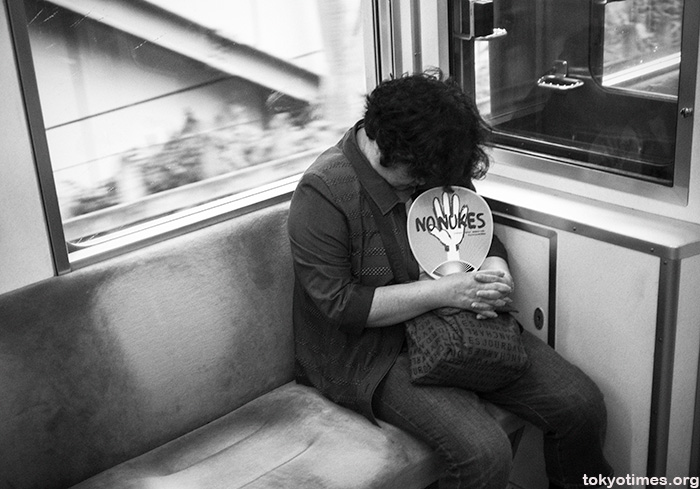
Over the weekend, Japan’s last operating nuclear plant was shut down, leaving the country without atomic power for the first time since 1970. A move that for a large number of people means job done — at last.
Photographs from a small group of islands
Over the weekend, Japan’s last operating nuclear plant was shut down, leaving the country without atomic power for the first time since 1970. A move that for a large number of people means job done — at last.
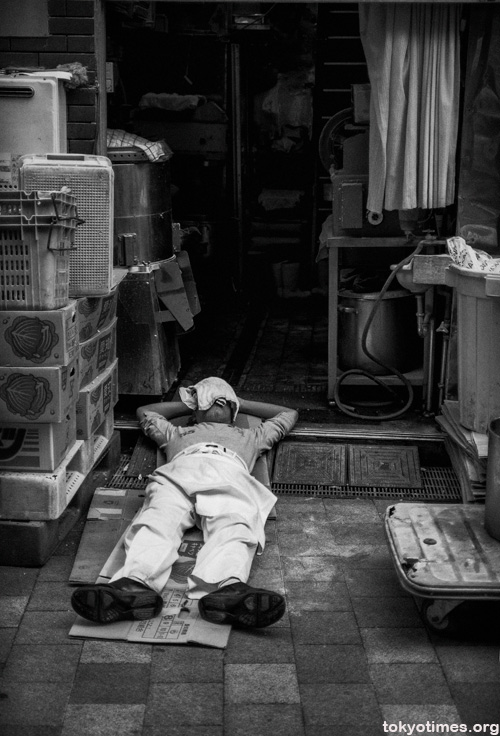
The ability of many Japanese to sleep practically anywhere, and at anytime, never ceases to amaze me. Standing up. Sitting down. Unceremoniously slumped. No situation seems capable of getting in the way of forty winks.
And it’s the same with this fella. The only difference being that although public.
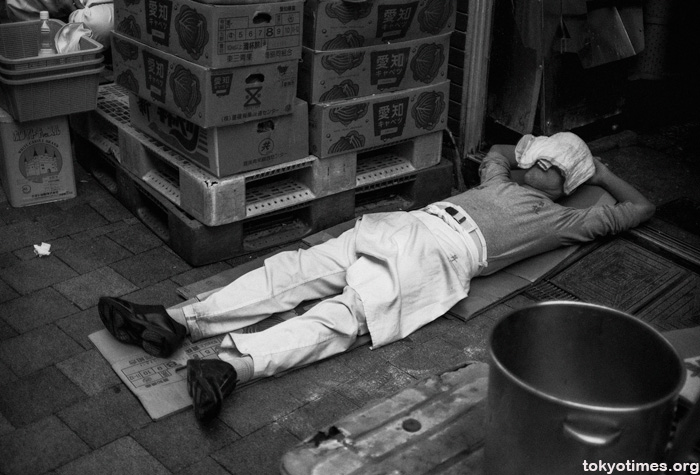
He was prepared.
Due to Japan’s rather old-fashioned approach to tattoos, this man won’t be able to spend some time in a spa, or even pop down to his local swimming pool. Thankfully he can, however, still stand and posture with them in the park.
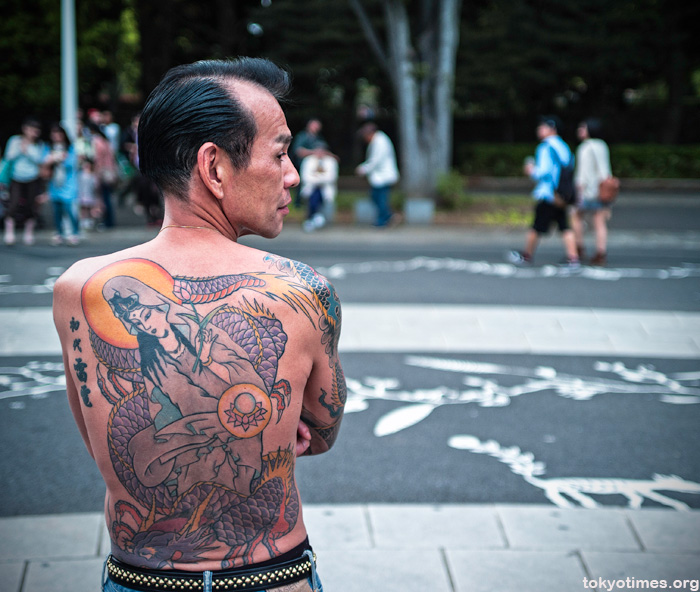
For a country renowned for its conformity, Japan throws up a wonderful array of contradictions, meaning one can never be completely sure of what’s round the next corner.
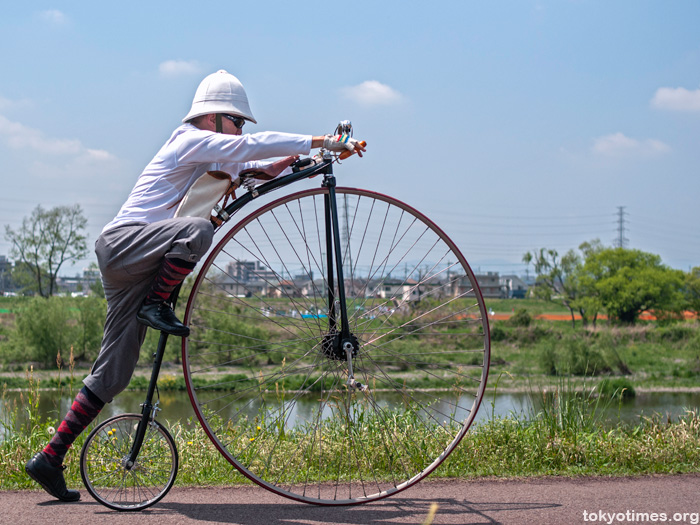
Surprises that, despite Tokyo’s many faults, make it a continually fascinating city to live in.
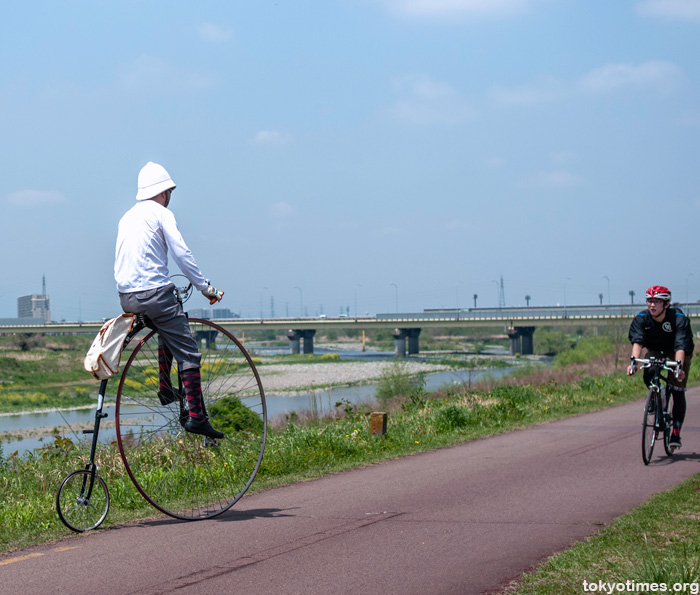
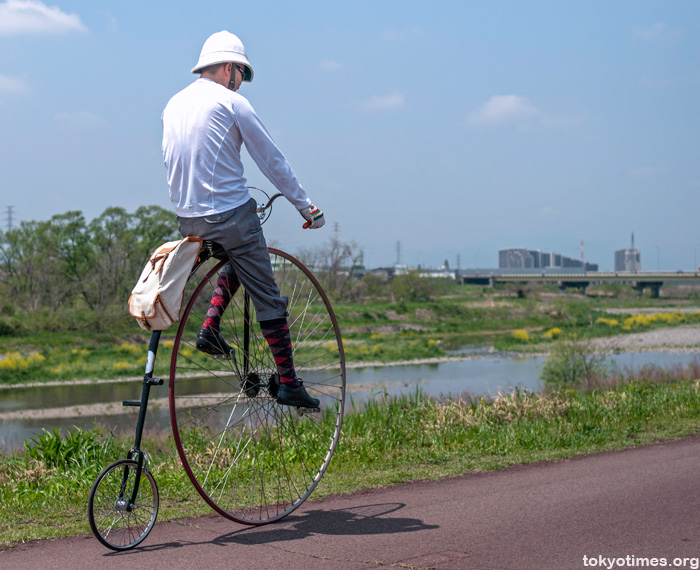
And it’s even better when you get to know one or two causes of said surprises — especially so when they turn out to be a person whose character is as decent as their bicycle is large.
Tokyo’s subway system is as clean and efficient as its highly praised cousin above ground. So much so in fact that it results in a rather sterile, characterless environment. One invariably made even more tedious by painfully long walks down practically indistinguishable passageways.
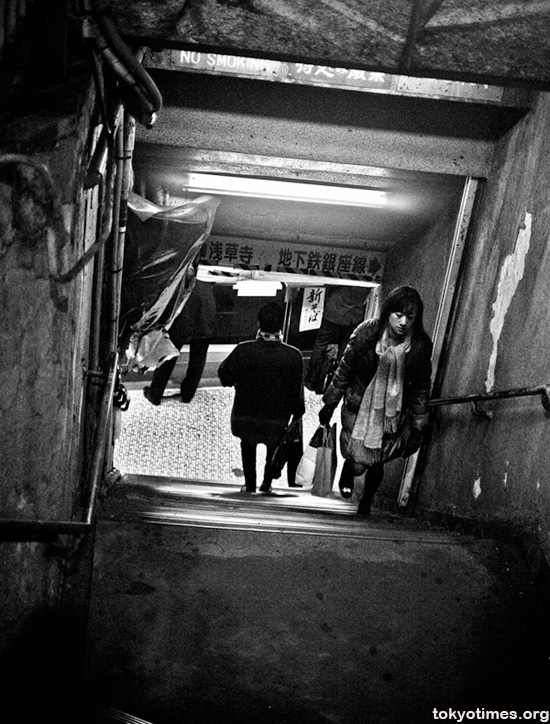
This exit in Asakusa, on the other hand, is arguably the exception to the rule. Yes, it smells. Plus its crumbling walls aren’t exactly appealing. But all together it’s a combination that arguably gives it something that the rest of the network is crying out for — a bit of character.