• Skip to main content
  • Skip to footer

Tokyo Times

Photographs from a small group of islands

  • Photowalks
  • Portfolio
  • Book and Prints
  • Newsletter
  • About/Contact
  • Follow
    • Facebook
    • Instagram
    • Twitter
    • RSS

Lee

Feb 12 2014 41 Comments

Uniform wearing nationalists at Yasukuni Shrine

Due to the controversy surrounding the enshrinement of 14 Class-A war criminals, Tokyo’s Yasukuni Shrine is rarely out of the news. And as such, the commonly named ‘war shrine’ is a constant source of tension between Japan and its neighbours, particularly when the Prime Minister opts to visit in an official capacity — fully aware of the anger it will cause.

Similarly, Yasukuni is also a focal point for Japan’s various nationalist organisations, especially so on politically sensitive, or culturally significant dates. Like yesterday, which was National Foundation Day.

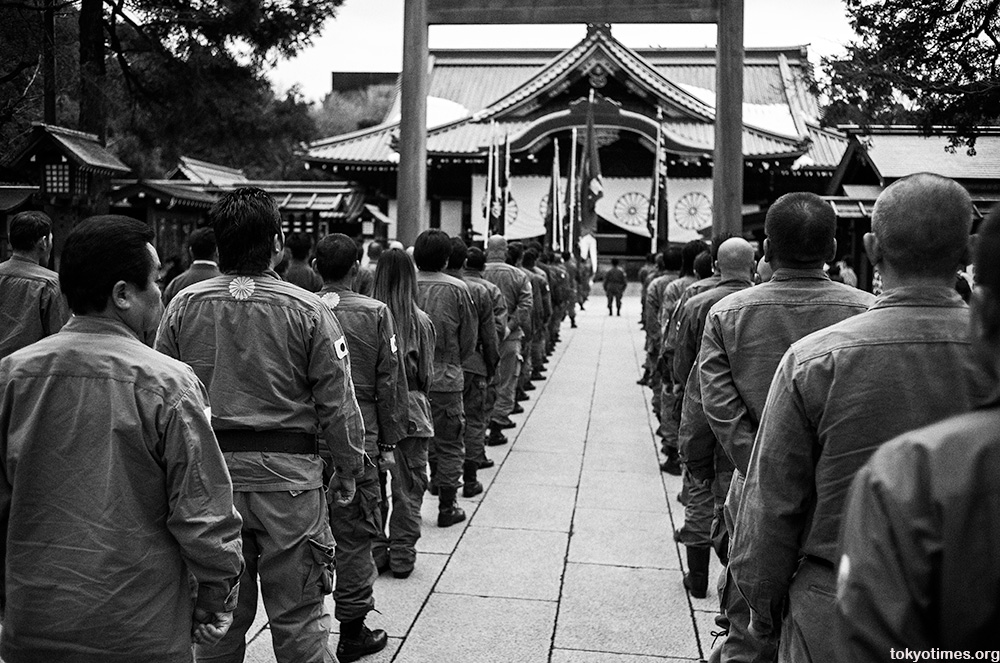
A day that in many ways perfectly sums up the problems and contradictions of Yasukuni. In the morning, there was the regular flow of locals, tourists and veterans — all there to pay their respects or simply to take photographs and look around. Then shortly after lunch, a large number of uniform wearing nationalists were noisily bussed in. A group that once organised, marched in line up to the main shrine area.
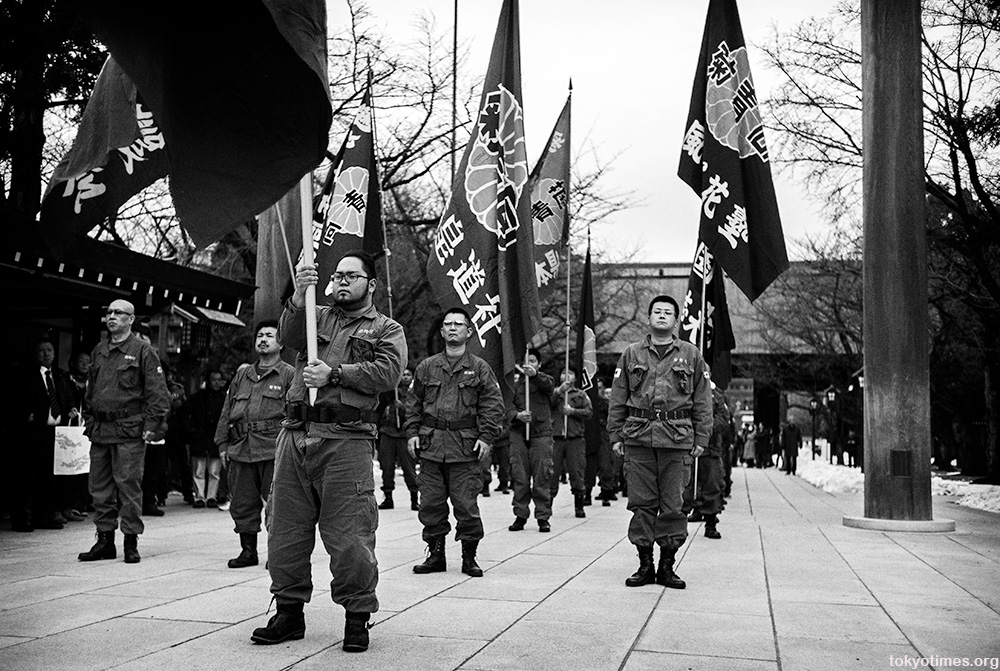
Japanese nationalists at Yasukuni Shrine

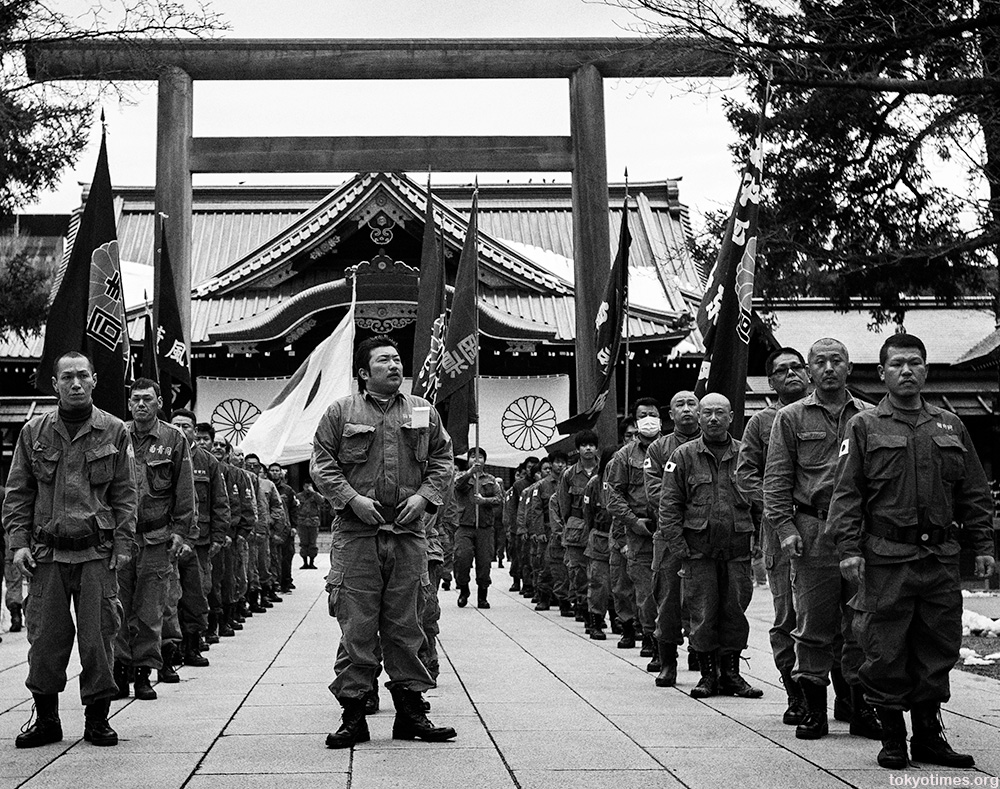
Where they stood to attention.

Japanese nationalists at Yasukuni Shrine

Quietly observed the planned and carefully orchestrated ceremony.
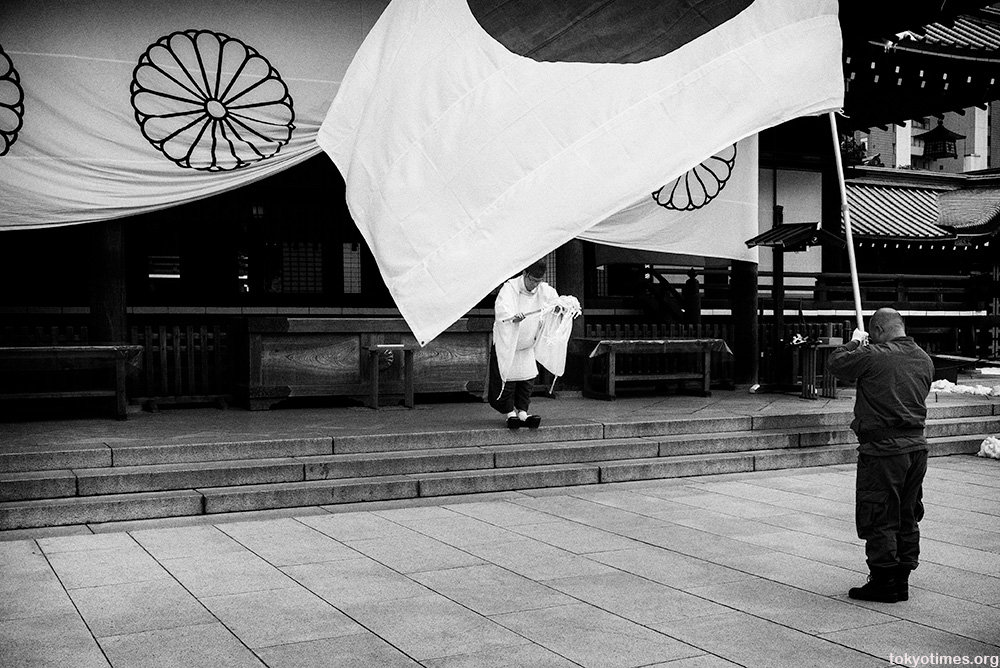
Japanese nationalists at Yasukuni Shrine

Then did an about-face.

Japanese nationalists at Yasukuni Shrine

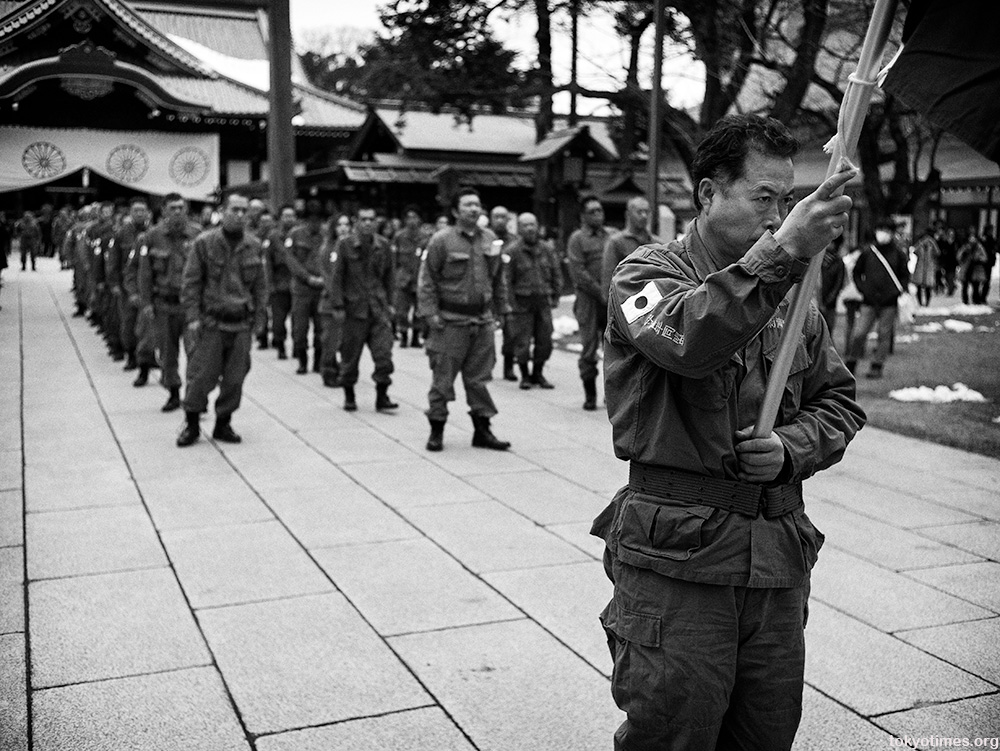
Moved flag bearers back up to the front.
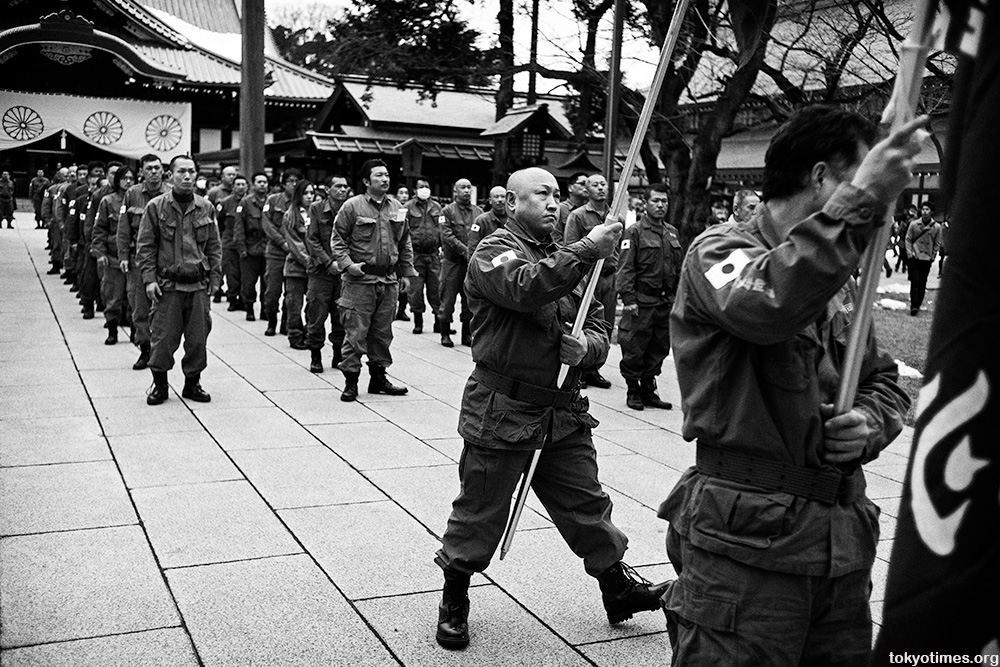
Japanese nationalists at Yasukuni Shrine

Japanese nationalists at Yasukuni Shrine

And then made a fairly speedy march back to the entrance.
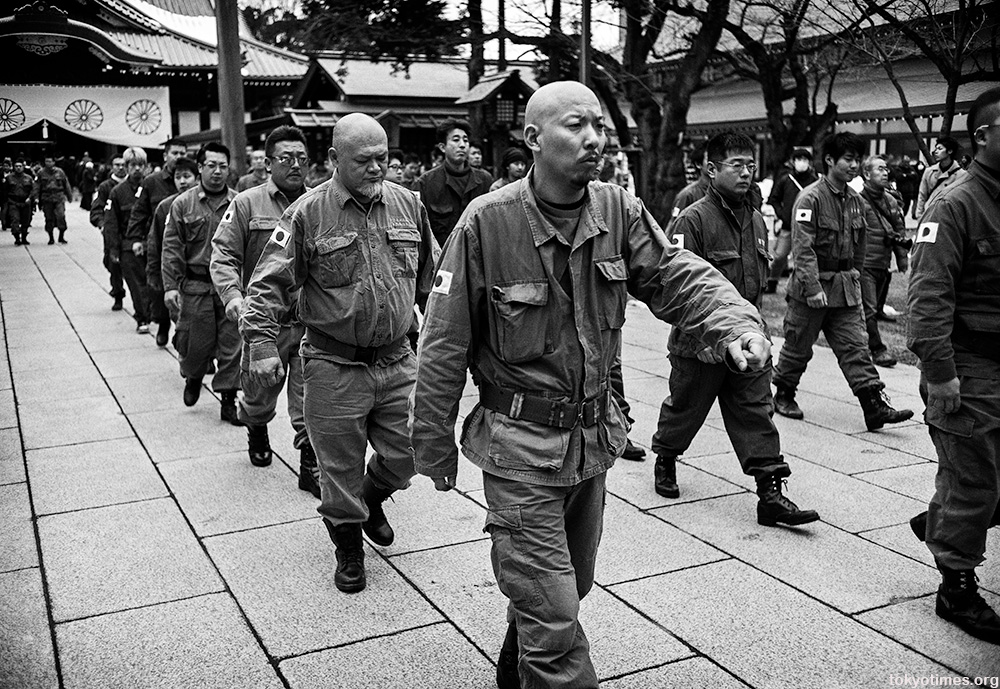
Japanese nationalists at Yasukuni Shrine

Their exit once again leaving Yasukuni Shrine to the families and much less antagonistic visitors that it’s generally more accustomed to.
Categorized: Photography, Religion

Feb 10 2014 18 Comments

A Tokyo shrine in the snow

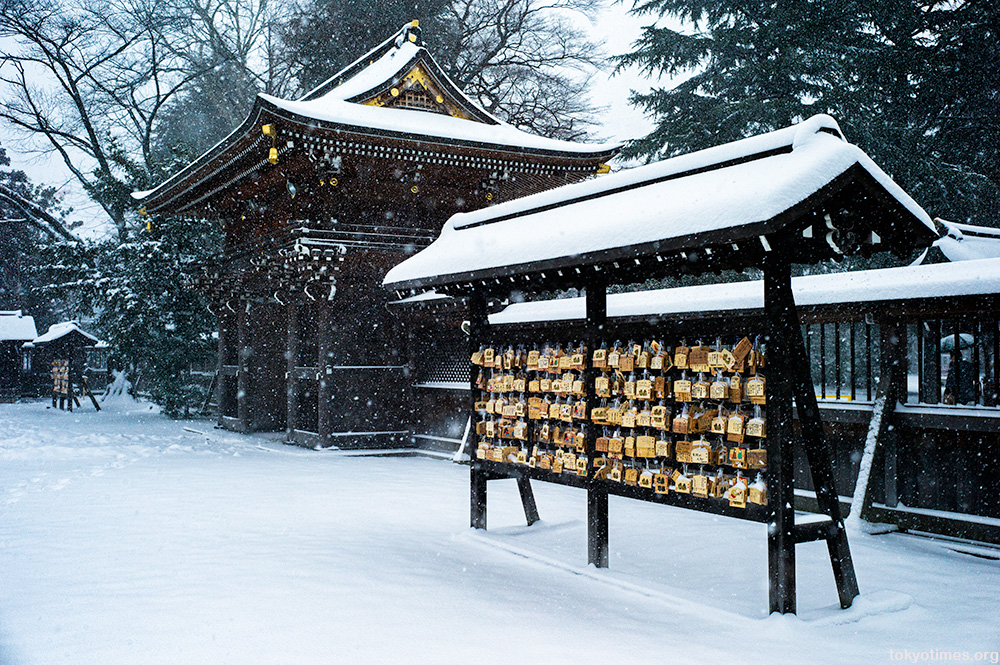
It doesn’t snow all that often in Tokyo. And very rarely as much as it did over the weekend. So when it does, there’s the inevitable chaos and complaining: train services deteriorate, people still attempt to cycle, plus millions of others shiver in uninsulated homes.

But some of the benefits — at least initially — are that it makes an ugly city almost pretty. And pretty things quite beautiful.

Tokyo shrine in the snow

Categorized: Photography, Religion

Feb 07 2014 8 Comments

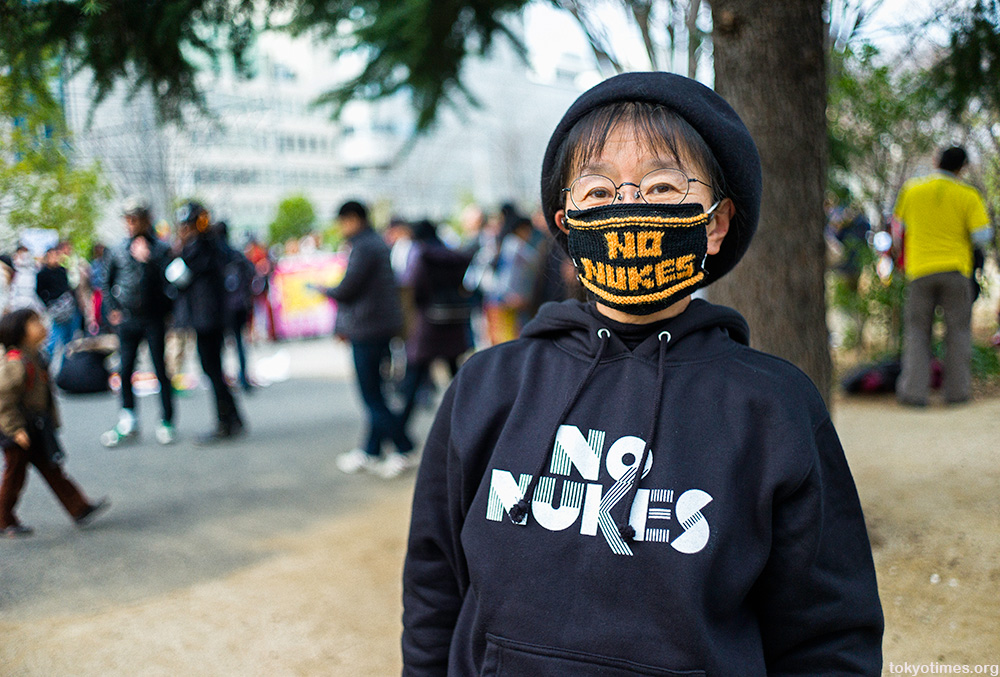
A Tokyo ‘no nukes’, anti-government, protestor

Japan’s current regime may be against her. The same also goes for the likely winner of Sunday’s Tokyo gubernatorial election. Plus, with the country’s supposedly impartial public broadcaster, NHK, now unapologetically backing the government, there’s scant hope of her getting any coverage, too.

But still she fights for what she believes in: battling away against the powers that be. And with Japan shifting ever more worryingly to the right, this woman, and thankfully many more like her — whether they be anti-nuclear or pro-democracy protestors — will become increasingly important.

Japanese anti-nuclear protestor

Or at least that’s what one hopes.

Categorized: Current Affairs, Photography

Feb 06 2014 6 Comments

A Setsubun lantern procession in Asakusa

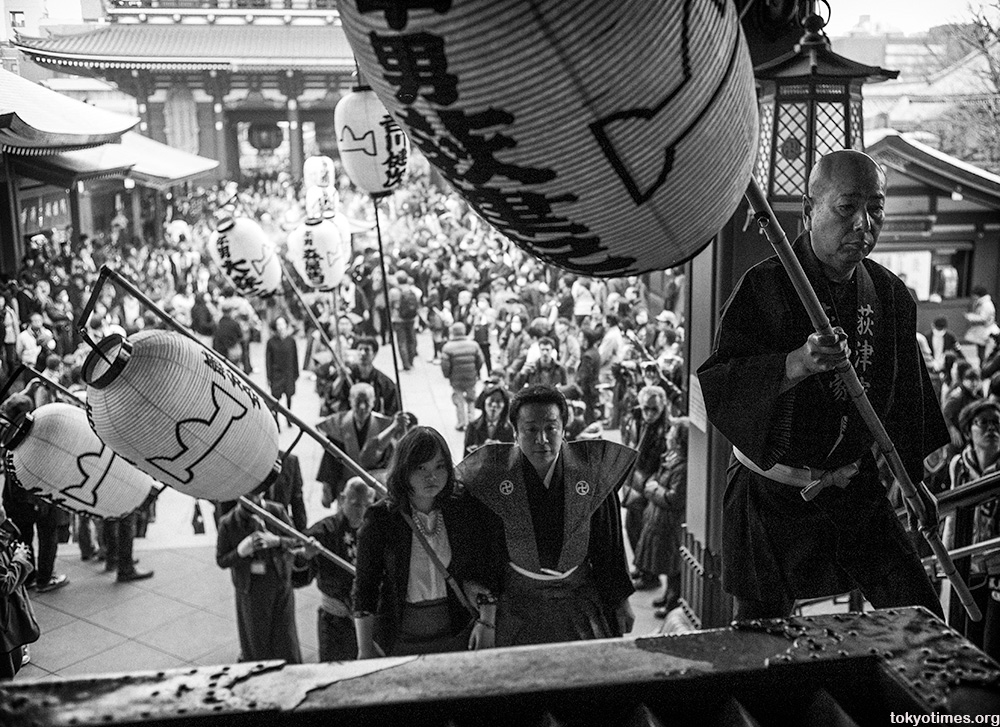
The traditional Setsubun ceremony is performed at countless temples across Japan on February 3rd — an event that involves throwing beans to dispel devils and bring good fortune. At Asakusa’s famous Sensoji Temple, however, the main event is also preceded by a lantern-bearing procession. A custom that may not bring luck or banish evil, but it does make for quite a spectacle.

Asakusa setsubun lantern procession

Categorized: Culture, Photography, Religion

Feb 04 2014 16 Comments

An abandoned Japanese murder hospital

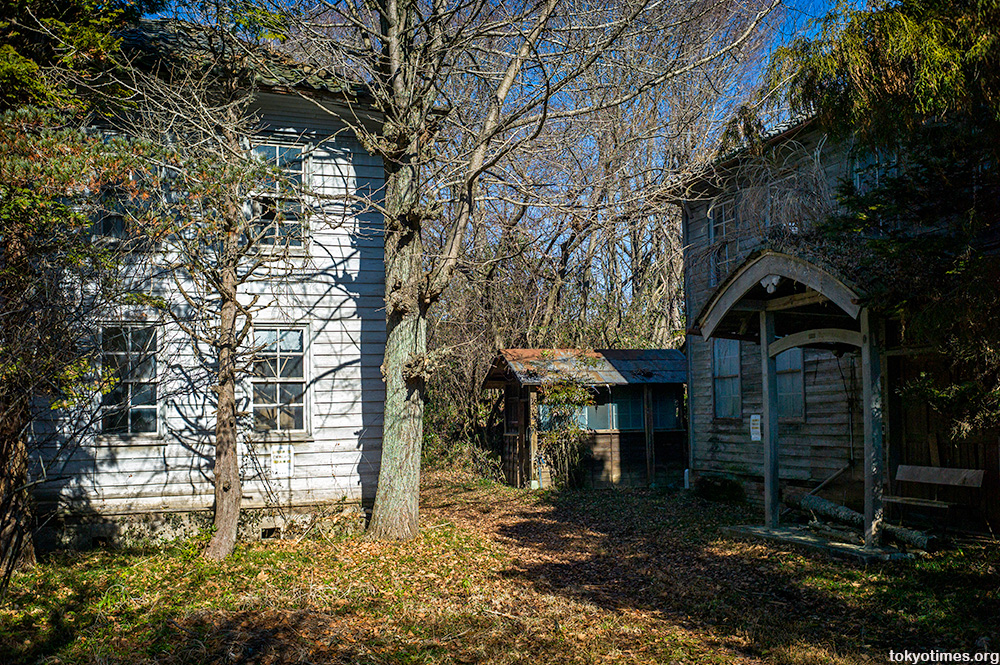
Arriving at the long-abandoned IK Hospital on a bright and unusually mild winter morning, the faded wooden buildings of the main hospital on the left, and doctors’ surgery on the right, were surprisingly welcoming.

abandoned Japanese murder hospital

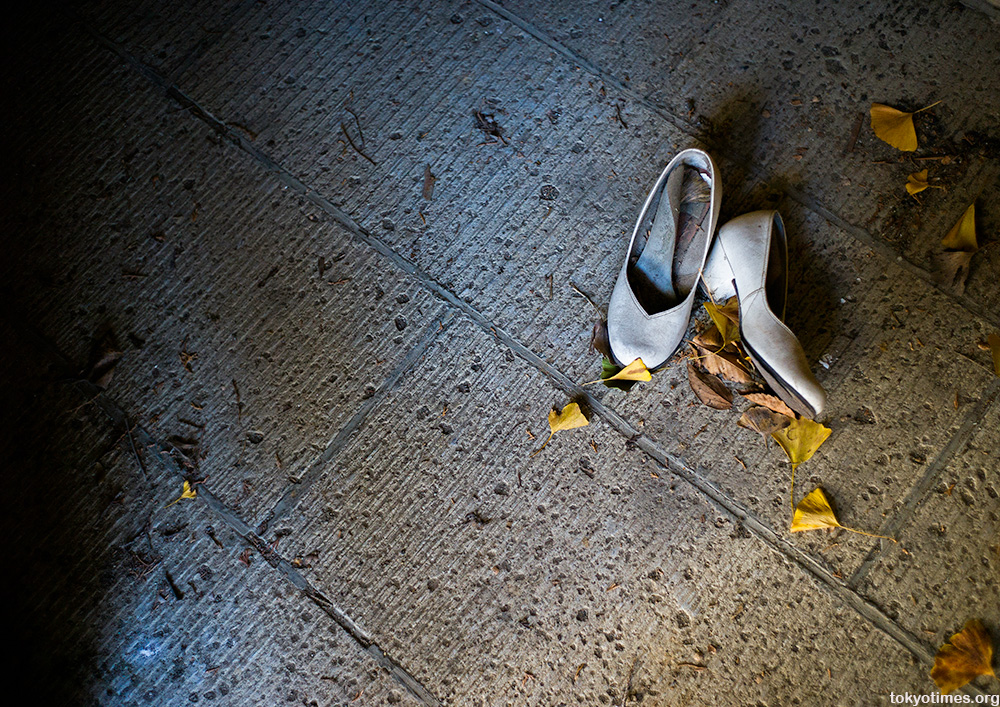
In the shade and the surgery, however, it wasn’t quite so appealing. The entrance immediately suggesting the interior would be very different.

abandoned Japanese murder hospital

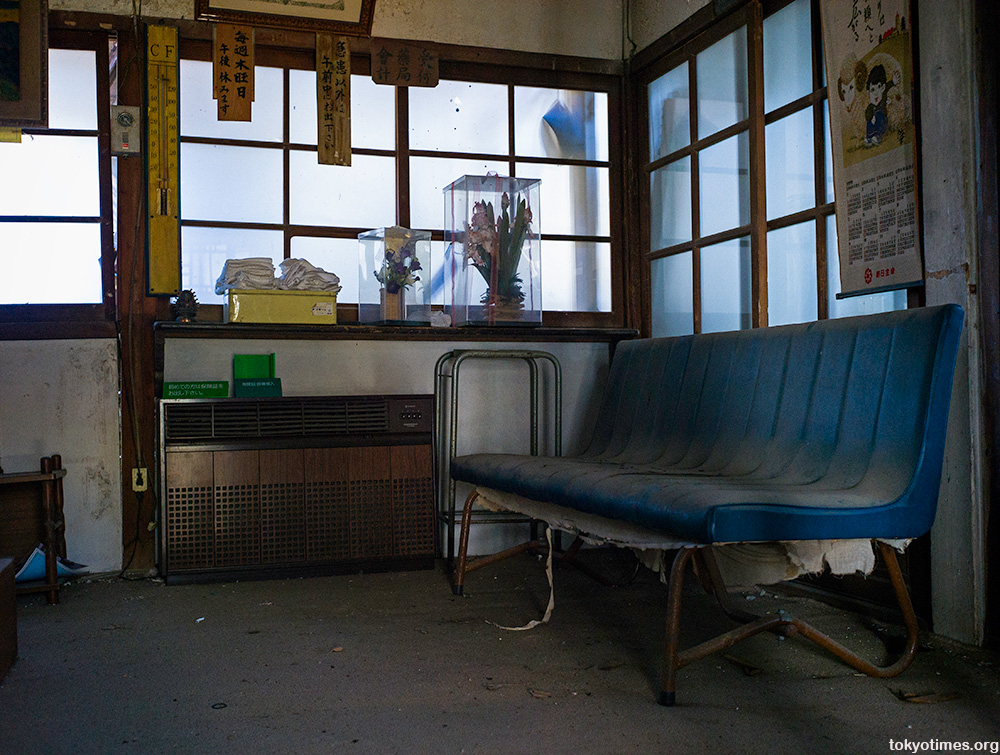
Which the horribly dated and incredibly dreary waiting room quickly confirmed.

abandoned Japanese murder hospital

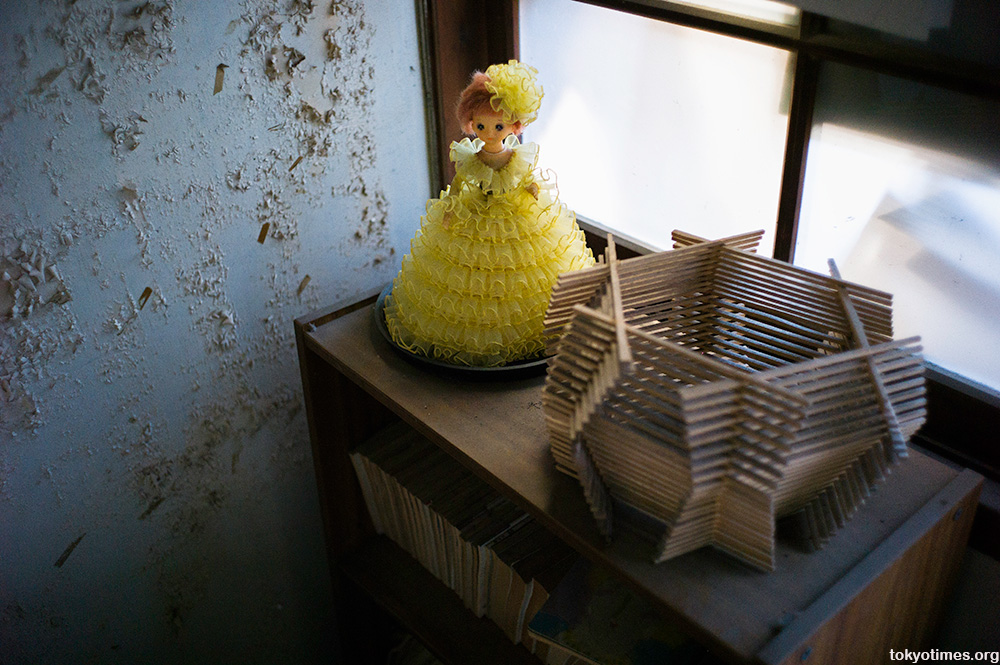
A decidedly gloomy atmosphere that the wall hangings and random ornaments completely failed to dispel.

abandoned Japanese murder hospital

Opened in 1951, the hospital specialised in internal medicine, paediatrics and obstetrics/gynaecology. And being very much on the small side — with only 8 or so rooms in the hospital, and half that in the surgery — it’s easy to imagine it being a relatively quiet, close-knit institution. Particularly so as it served a fairly rural and sparsely populated area.

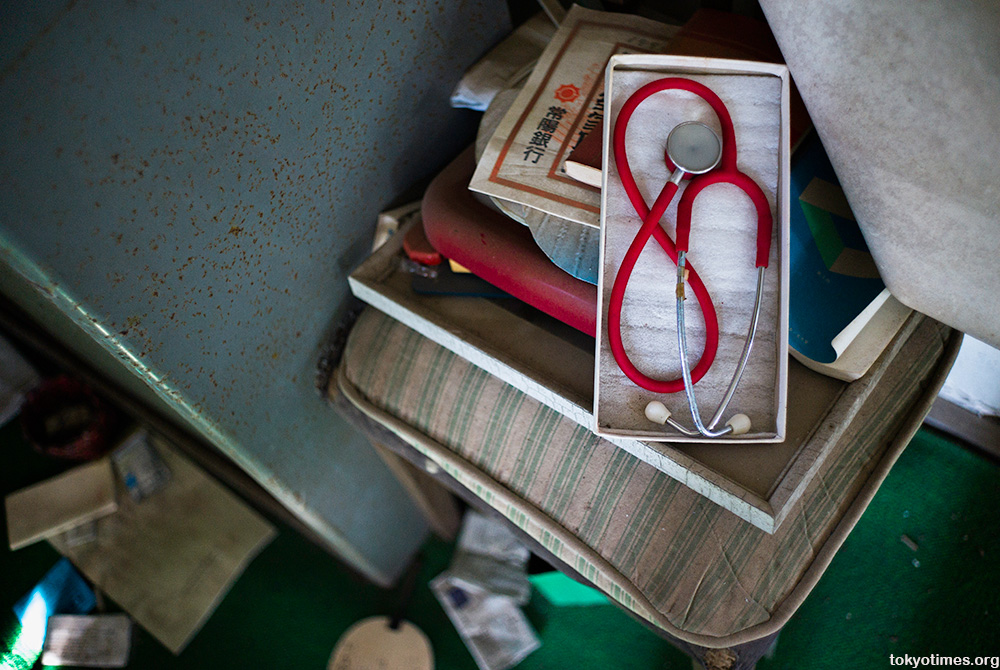
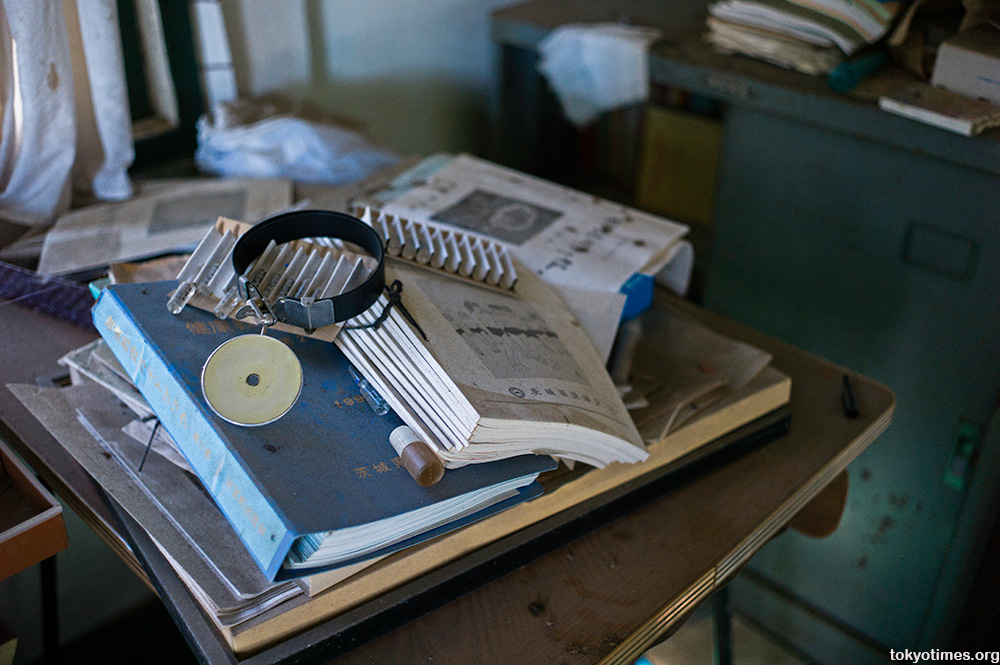
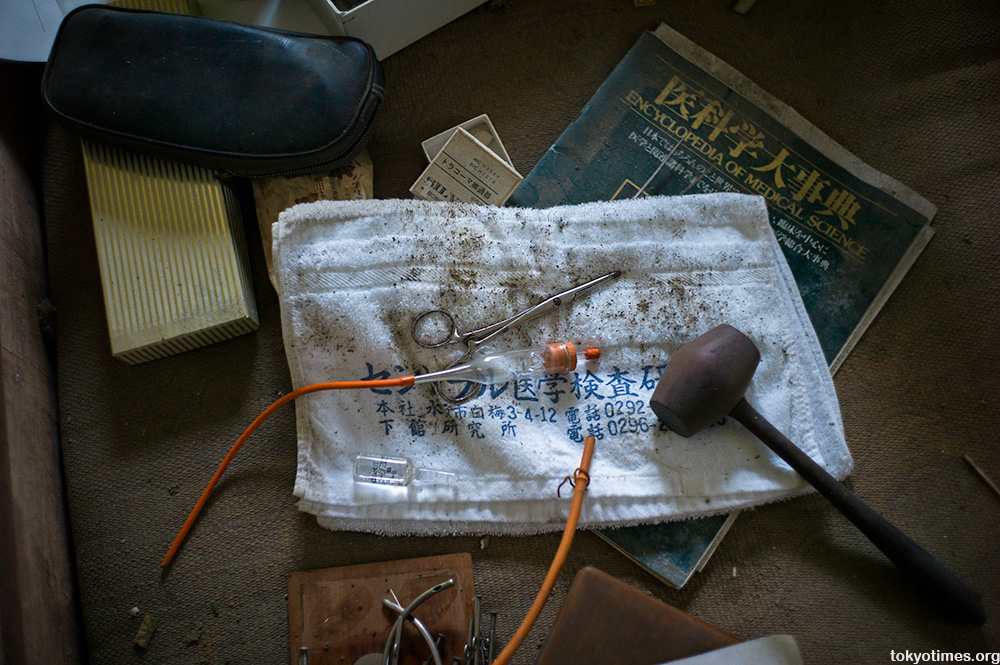
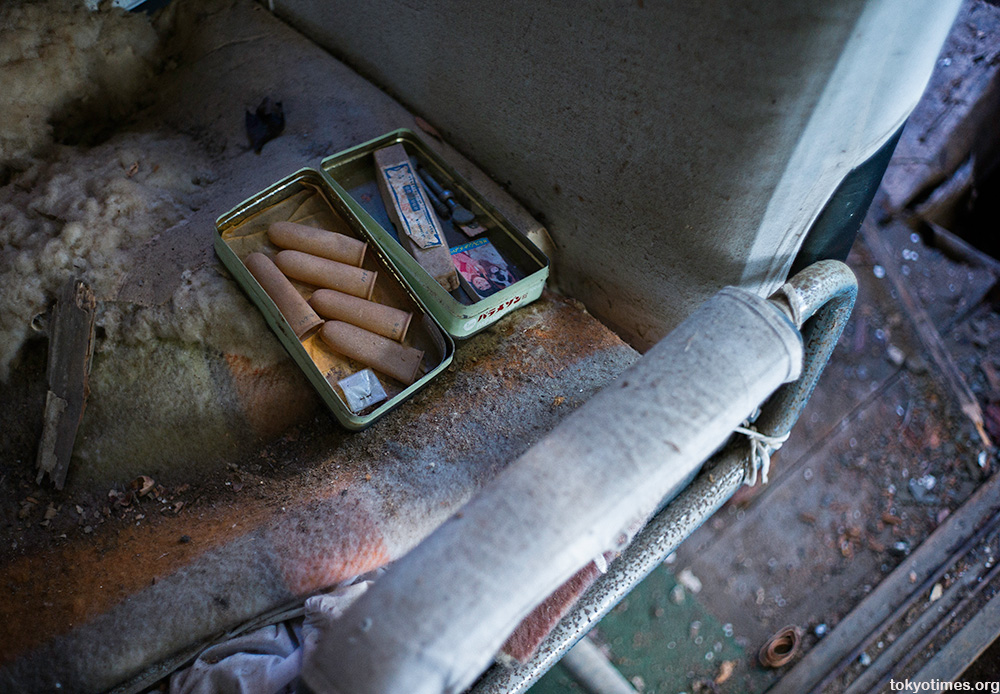
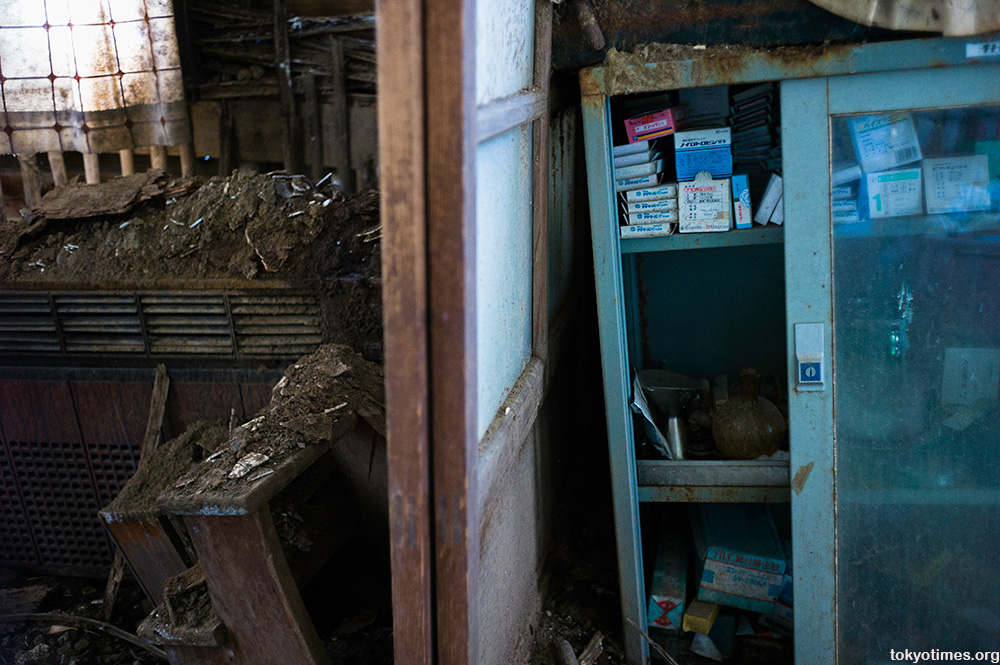
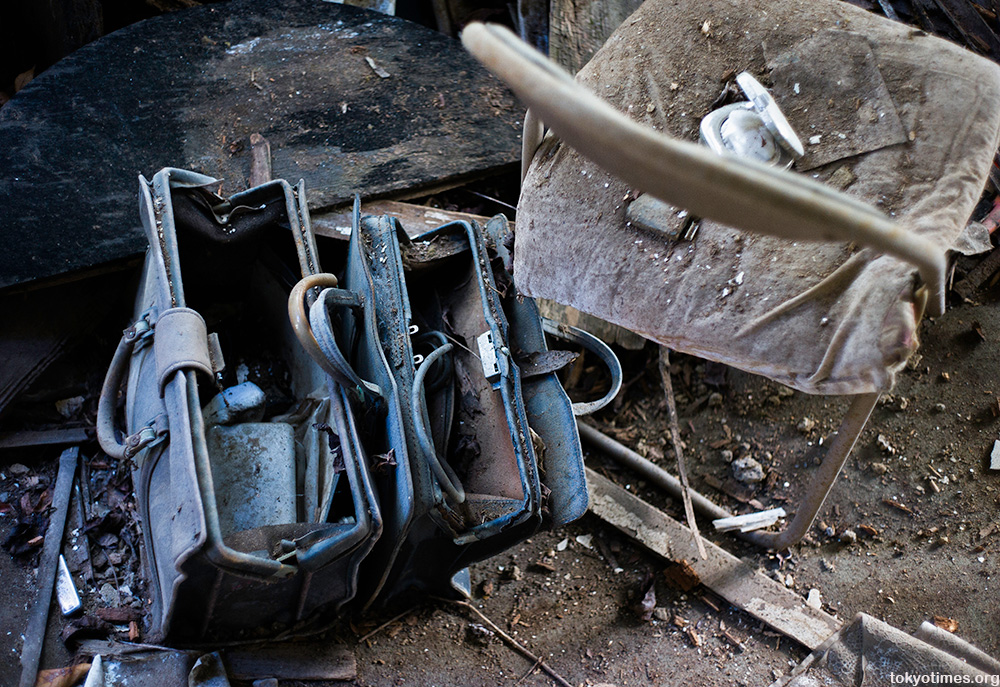
But now it merely serves as a reminder, and similarly there are lots of them in regards its former function, with a whole host of medical equipment and paraphernalia strewn about the place.

abandoned Japanese murder hospital

abandoned Japanese murder hospital

abandoned Japanese murder hospital

abandoned Japanese murder hospital

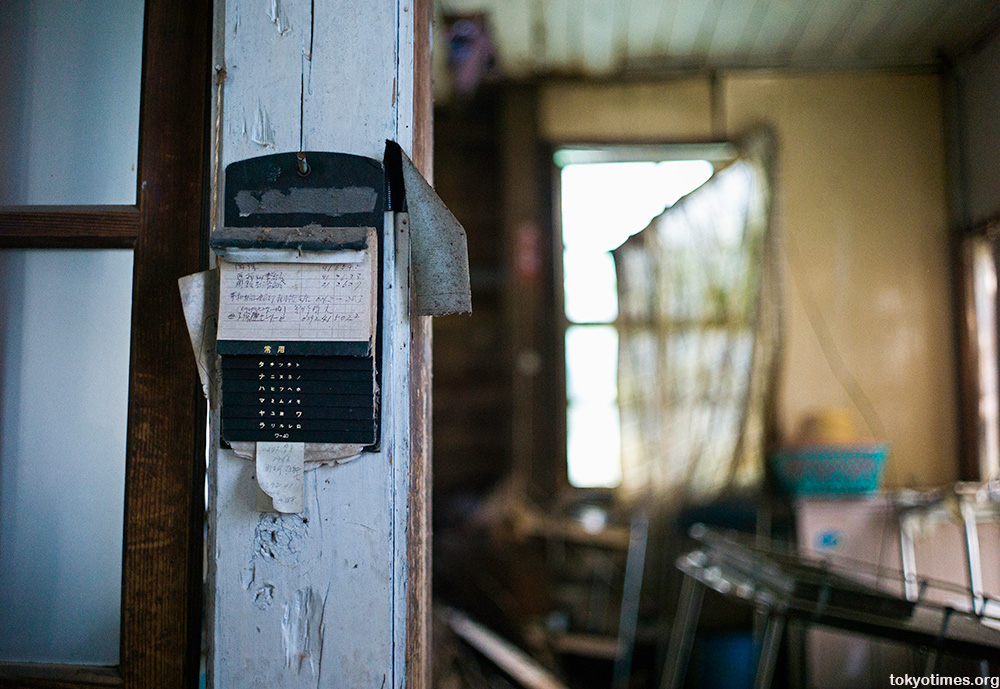
Along with more administrative details such as memos and phone numbers.

abandoned Japanese murder hospital

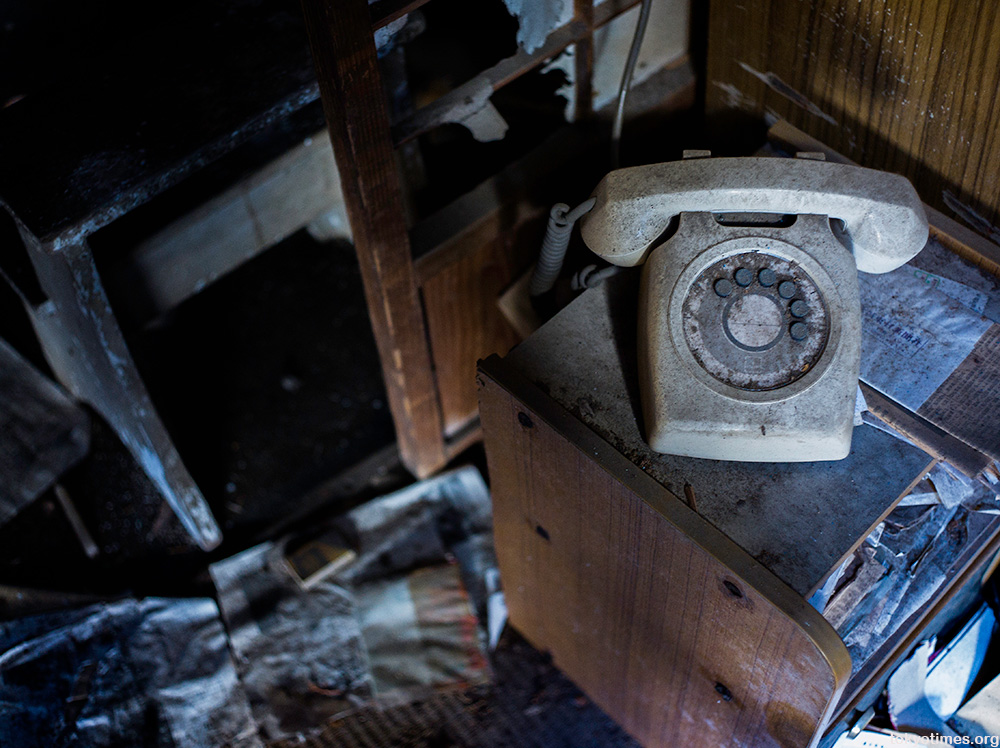
Not to mention the means of communication.

abandoned Japanese murder hospital

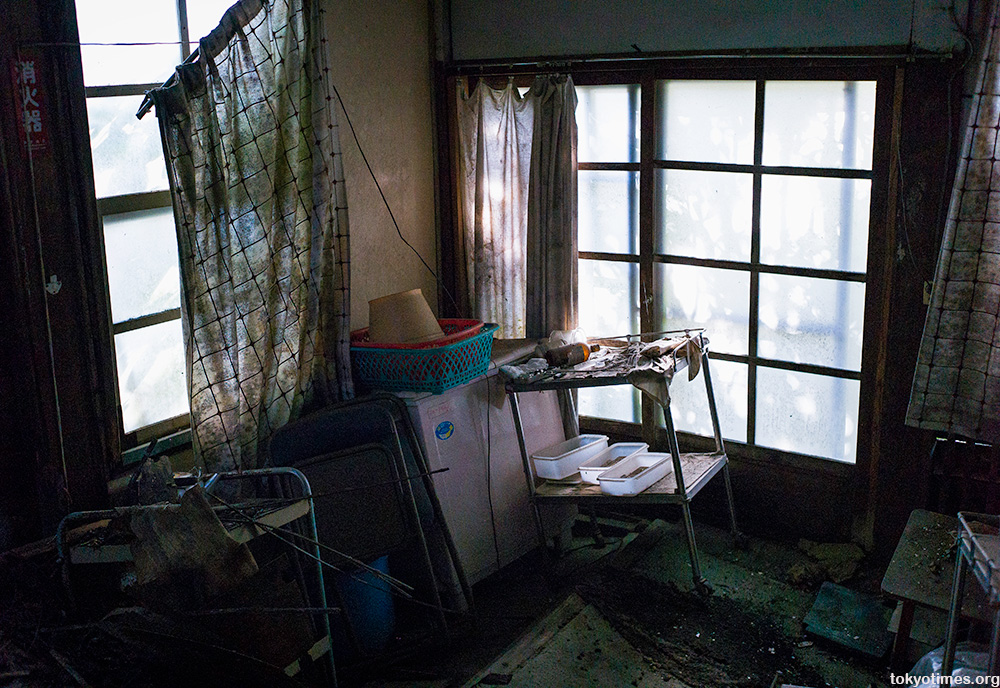
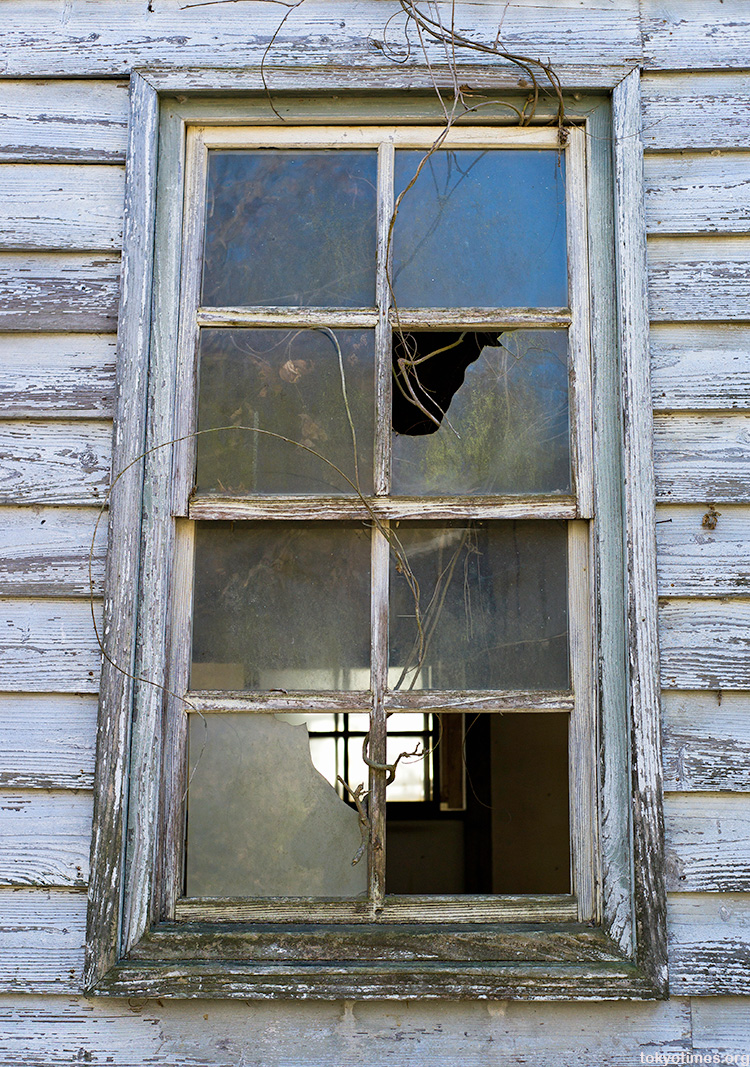
Time and the elements, however, have really taken their toll. Subsidence is presumably a major factor, which has left some parts almost completely intact, and others in an absolutely dreadful state.

abandoned Japanese murder hospital

A fair bit having fallen down completely, with other sections rapidly heading that way.

abandoned Japanese murder hospital

Taking, as they go, even more reminders of the past.

abandoned Japanese murder hospital

And it’s the past that in many ways makes the hospital so unique; something that is generally a factor with most haikyo/abandoned buildings. Whether it be a once opulent politician’s house, remote mountain village or memory-filled school — they all have stories to tell. Yet none of them are as shocking as the one belonging to the IK Hospital.

Back in 1992, for reasons undocumented, it’s reported that the head doctor went berserk, killing both the staff and patients — each and every one of them. A truly nightmarish event that obviously meant the immediate closure of the facility, and in turn its abandoned state today.

Details are unfortunately scarce, with numerous mentions on Japanese sites never linking to an actual news report, but it is assumed the murders occurred in the main hospital building — a structure that these days gives little away in relation to the horrors that went on there.

abandoned Japanese murder hospital

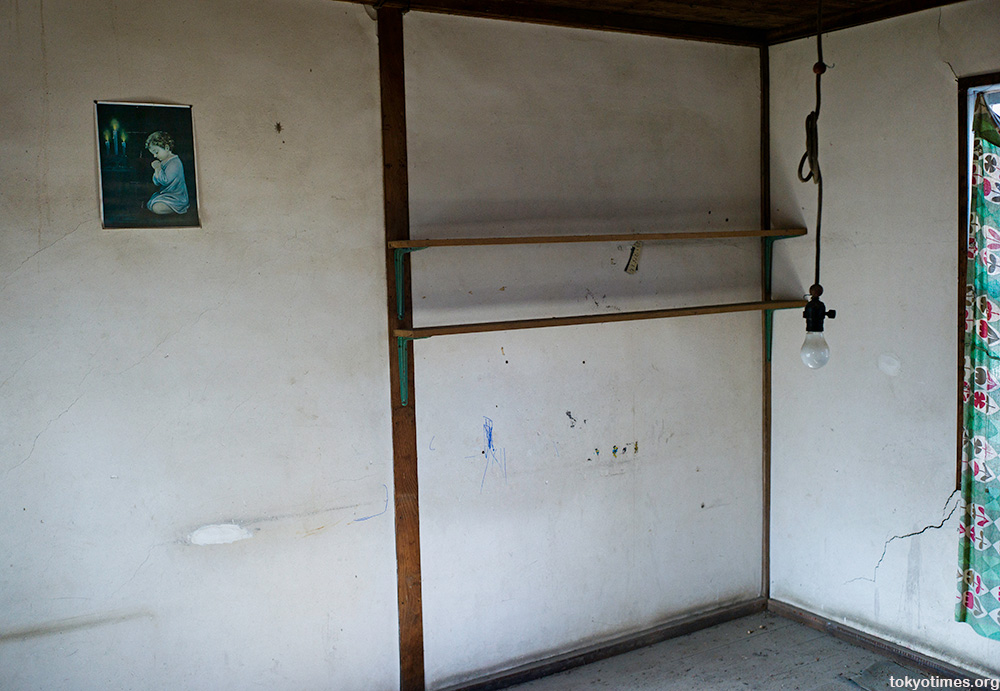
It too has suffered some pretty severe damage over the years, but unlike the surgery, it’s empty, with nothing in the way of hints about the murders, except perhaps this sad, solitary picture.

abandoned Japanese murder hospital

Categorized: Haikyo

« Previous Page
Next Page »

Footer

Copyright © 2026 · Tokyo Times