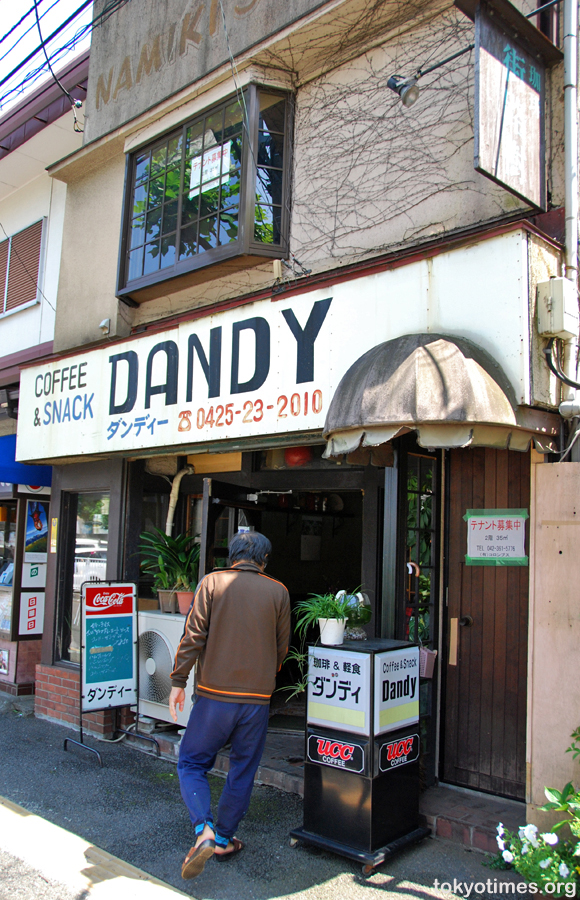
Inside, the décor of this coffee shop may well be deemed as dandy, but as far as the clothing of its customers is concerned, conventions would appear to be considerably more casual.
Photographs from a small group of islands
Inside, the décor of this coffee shop may well be deemed as dandy, but as far as the clothing of its customers is concerned, conventions would appear to be considerably more casual.
The Japanese drinks industry is in no way deficient of diversity, with a constantly changing range of products to choose from. However, that said, foreign firms have still managed to find some space in a seemingly saturated market, and in particular, cola giants Pepsi and Coca have a considerably strong presence.
In fact, Pepsi’s position is so secure that it can happily subject an unsuspecting public to sickening summer specials, with last year’s cucumber-based abomination now being followed by the equally awful Blue Hawaii.
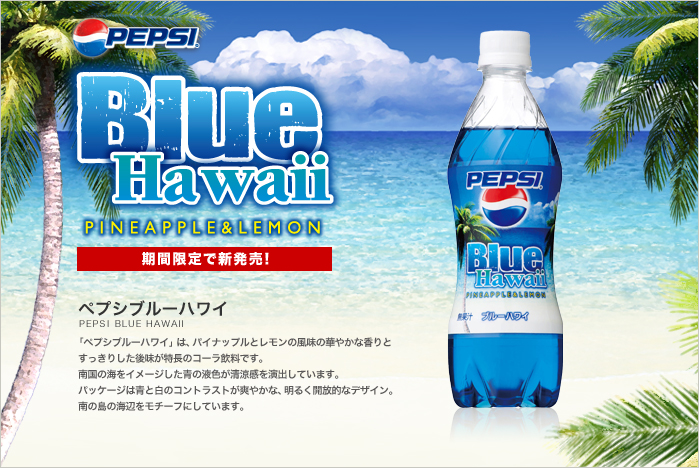
A concoction that is a bizarre mix of pineapple and lemon along with the customary cola, which, while far from pleasant, just about conceals the colossal number of chemicals that must have been included to create its dazzling blue hue.
Meaning a comforting Kit Kat is the ideal treat to counter the beverage’s additive-addled aftertaste, while at the same time offering Pepsi a pertinent lesson in how to successfully produce a special edition that is not only tasty, but also way too tempting to turn down.

In a new weekend feature that unfortunately will probably fade away in next to no time due to either forgetfulness or fizzy drink fatigue, Tokyo Times will sample a beverage from the multitudinous amount that can be found in the nation’s equally numerous convenience stores and vending machines.
So, first up, if you can somehow contain your excitement, is a can of, erm, canned coffee, which is arguably an appropriate start as this popular drink is now almost as much a part of the culture as sushi and soba.
Plus it’s wonderful as well.
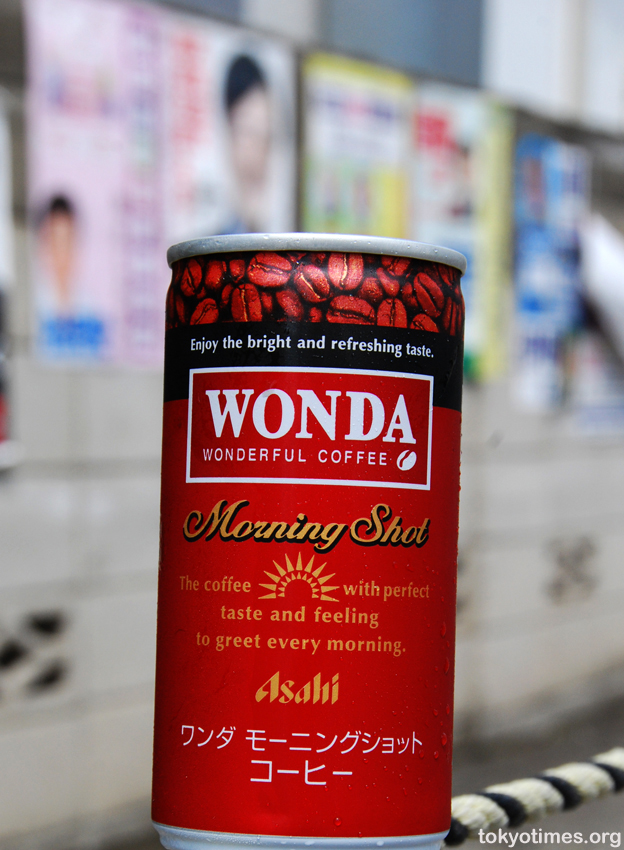
Or at least it’s supposed to be anyway, but despite Asahi’s claims, Morning Shot’s sugary mix tastes much the same as the myriad of other coffee’s on the market, although it should offer enough of a boost to just about set a salary man on his the way to another twelve hour day and a trek on the train.
As unfathomable as it may be, many Japanese appear to find faeces something that can be fun rather than quickly flushed away, with the likes of silly toys and cell phone straps merely the tip of the nation’s turd-related tat.
However, as far as food is concerned, one arguably wouldn’t expect anyone to purchase any poop-inspired produce, but judging by this proud promotion,
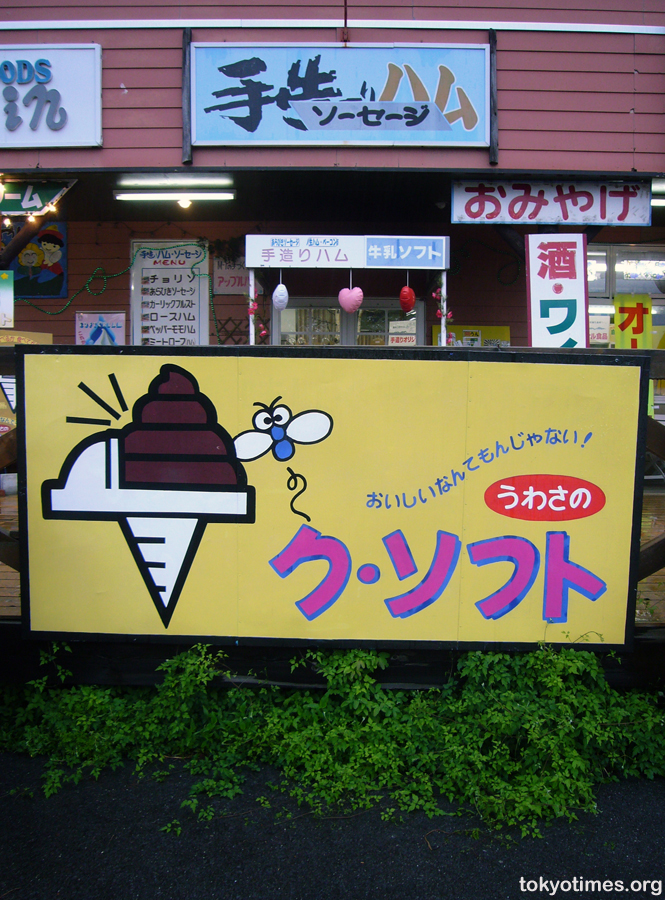
there may well be a market.

And although the fly is presumably only for artistic purposes, the faecal-like foodstuff and the traditional toilet-based tub, clearly aren’t.
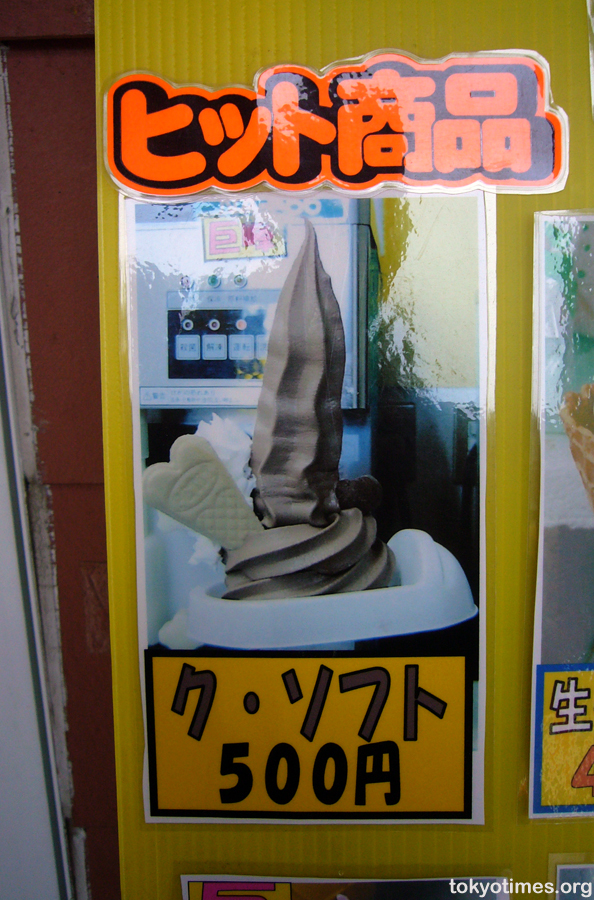
(click images for extra-large excrement ice cream)
Japan may well be one of the world’s most affluent nations, but the current food crisis is still being felt by the country’s cost-conscious consumers. Butter for example has actually been absent from supermarket shelves in some places, and even the single man with his loyal companions of instant noodles and lager has had to suffer his first price rise in years.
However, if such a fella should sensibly supplement his diet with some fresh but far from exotic fruit, heaven forbid that costs in this department should increase, as a (yes a) measly mango can set a salary man back a phenomenally fruity 8,400 yen (81 dollars).

A figure that arguably makes these similarly priced grapes appear something of a bargain — them coming in a box and numbering more than one.
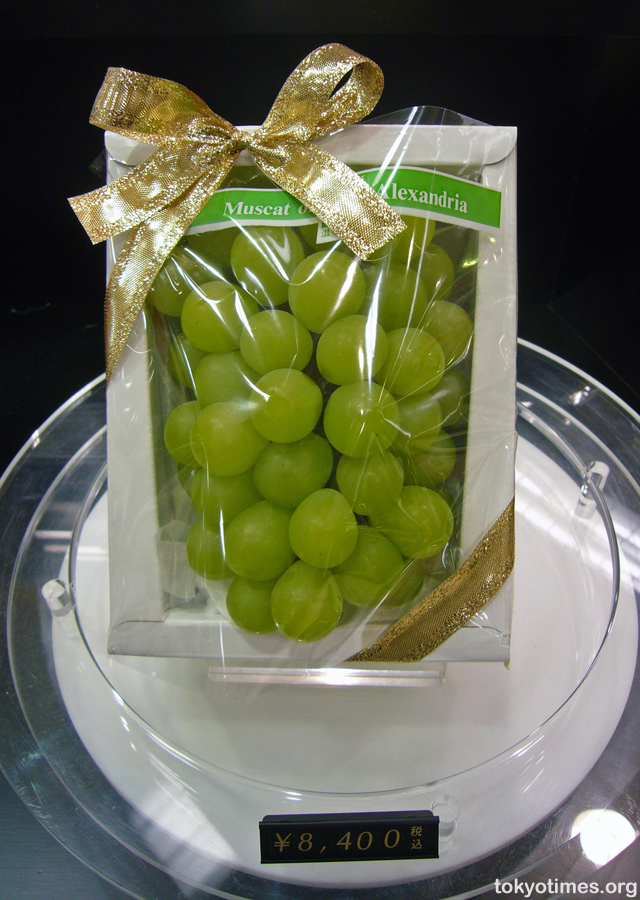
Cherries on the other hand are another matter all together, as pretty packaging aside, for 12,600 yen (121 dollars), a young man could probably pay less to actually pop his cherry than purchase one.
