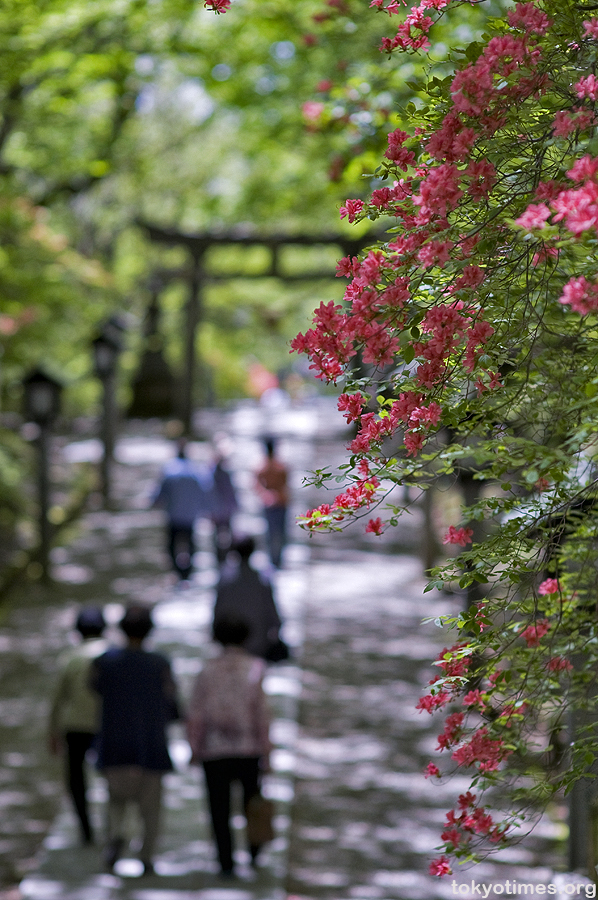
The simple serenity of sauntering around a shrine on a sunny day whilst surrounded by azaleas.
Photographs from a small group of islands
The simple serenity of sauntering around a shrine on a sunny day whilst surrounded by azaleas.
The grey and sulphur smelling slopes of Tochigi Prefecture’s Chausudake volcano are slightly otherworldly to start with, an almost lunar-like landscape that the famous haiku poet, Basho, when describing the area around what’s known as the Killing Stone, declared that so many dead bees and moths were scattered about that the colour of the sand could not be determined.
And yet otherworldly quickly turns into wondrous when one sees the jumble of daintily-bonneted Jizo dotted amongst the debris.
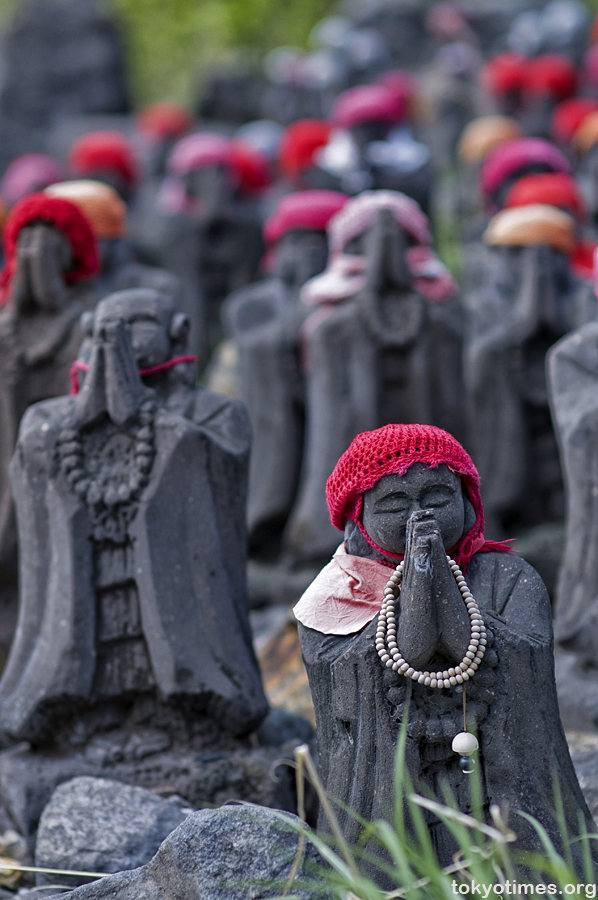
Figures that, whilst more often than not have a decidedly melancholy meaning, are here somehow transformed into a spectacle that is really rather soothing.
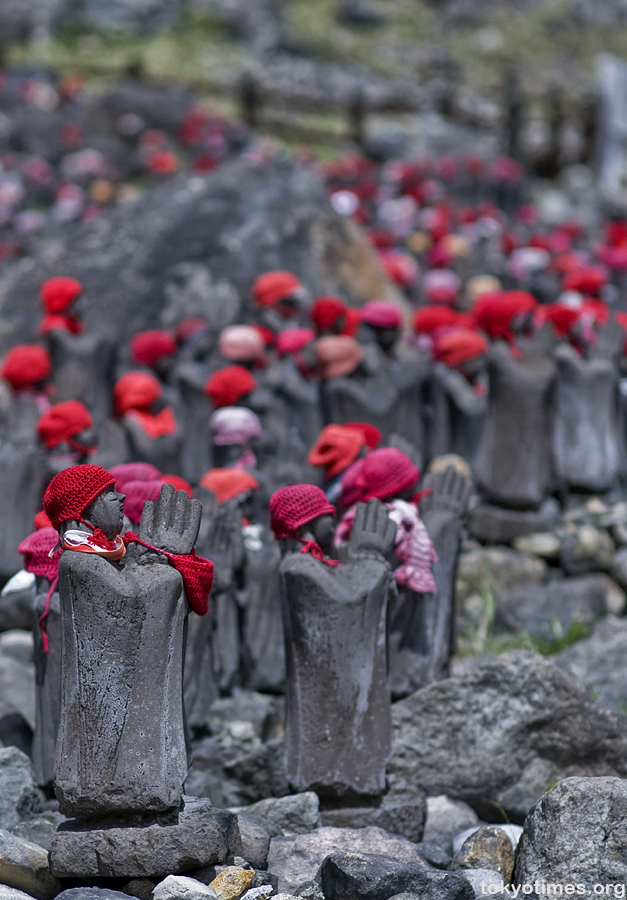
A conversion that could well have something to do with the sheer number of them.
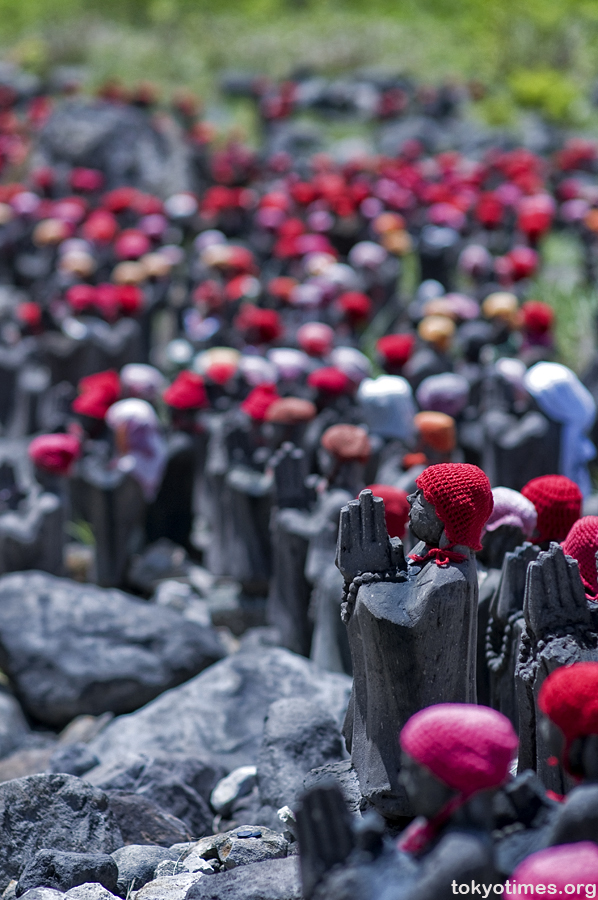
Or maybe it’s because they look so serene.
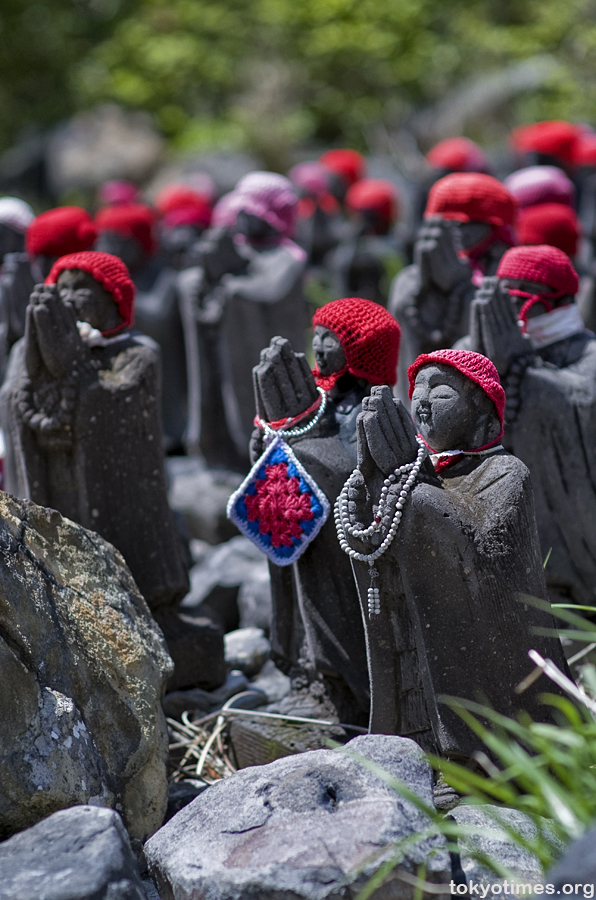
I simply don’t know.
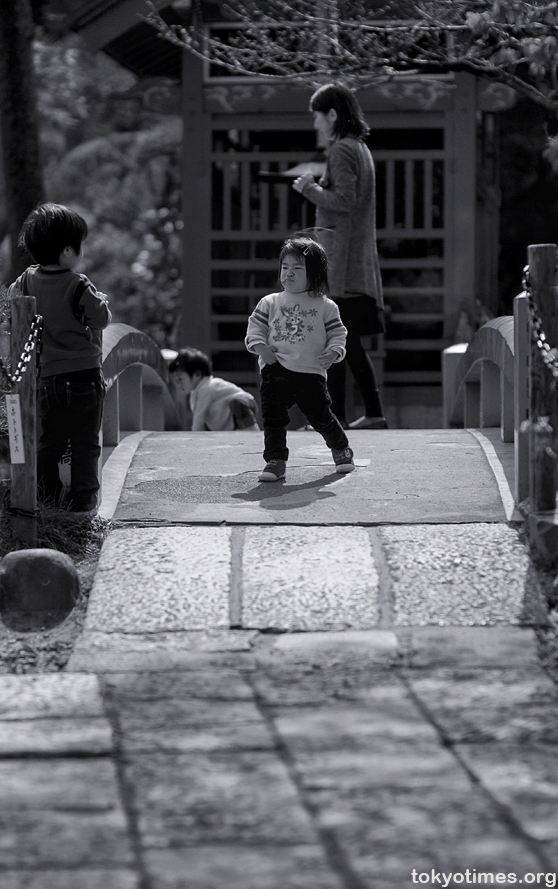
Peace on earth and goodwill to all men.
Well, except that is, bigger, and badly behaved, older brothers.
It’s not unusual to see Buddhist priests offering prayers and accepting money outside stations or dotted about Tokyo’s streets, but from my experience at least, I have never seen anyone stood talking or receiving ‘treatment’ from them. Well, until a recent saunter around Sugamo that is.
Known as the Harajuku for old ladies, where the average age is about 107 and there’s more pushiness than at a pushing contest for the overly pushy, priests are not only present in noticeably larger numbers than normal, but they also appear to offer (literally) hands-on help with certain ailments — photographs of which I regrettably didn’t manage to get due to the just mentioned amounts of jostling.
I did, however, bag some pictures of a few priests in more communicative action.
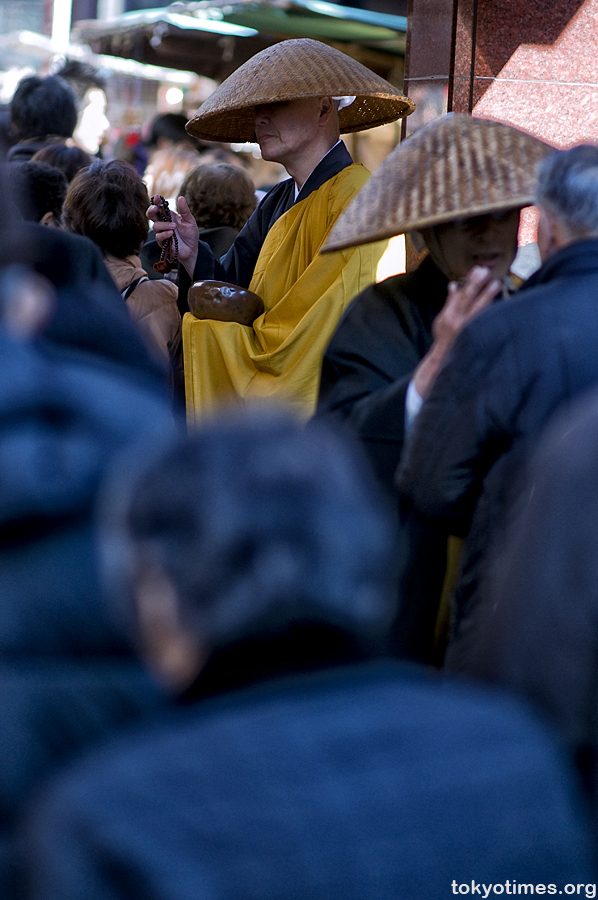
The pair of them dealing with what, for want of a better description, looked like a load of old ladies lining up for confession.
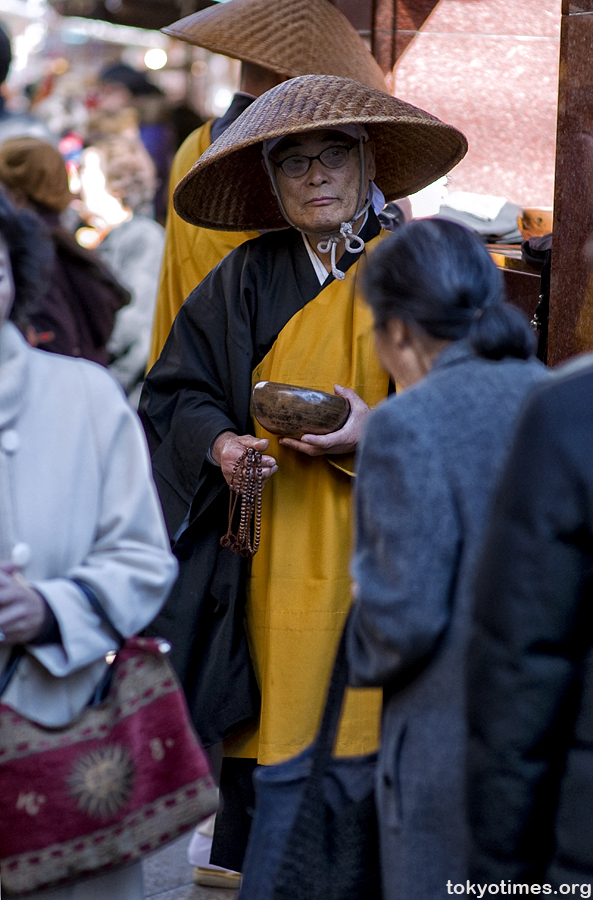
Although what they were actually talking about, and whether this kind of thing is common, I really don’t know, but I’d certainly welcome any suggestions from somebody who does.
Apart from the homes of their parents, and possibly even pachinko, the place most Japanese people will set out to visit over the New Year is the shrine. An event that, apart from a quick pray, invariably involves coughing up for a new collection of lucky charms.
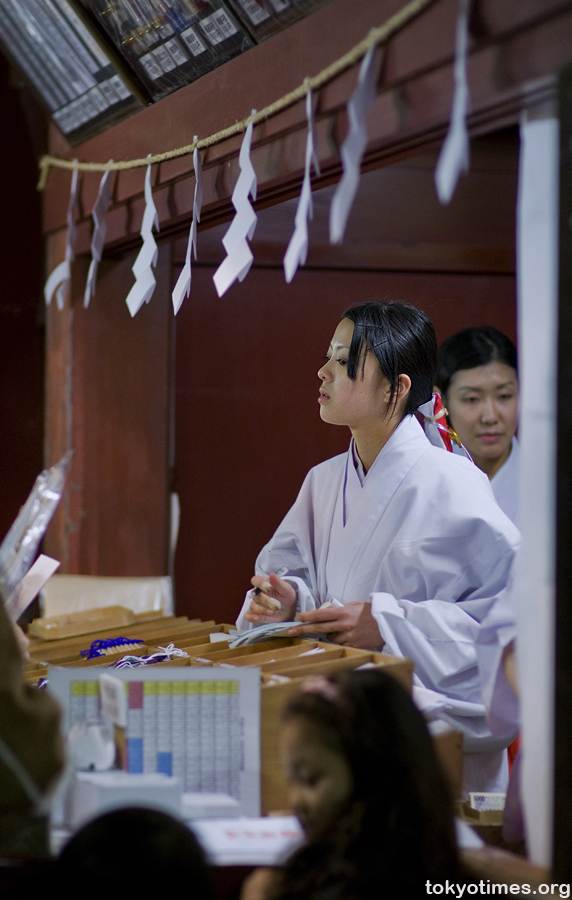
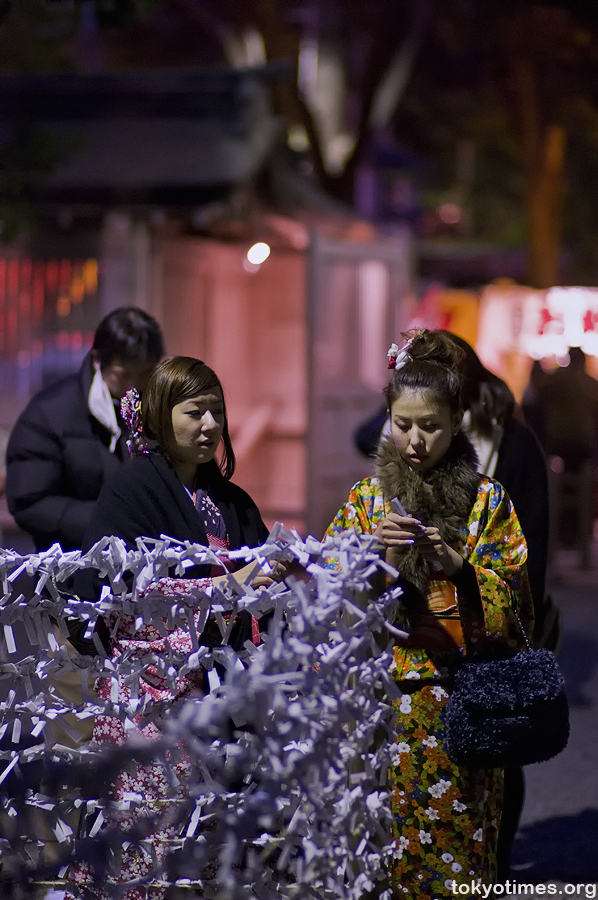
And, more often than not, an omikuji (random fortune), which, after the fun of finding out if it’s a good or bad one,
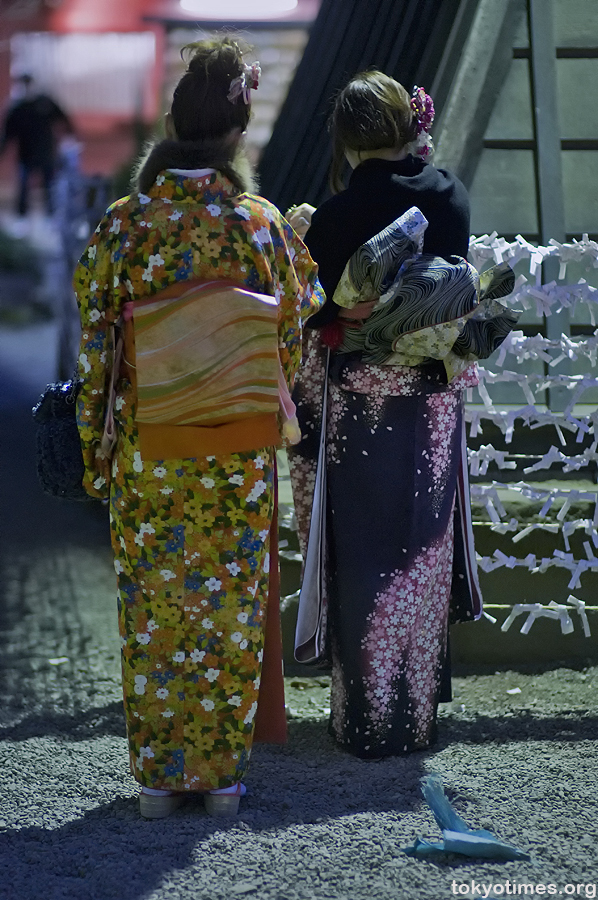
can be securely fixed to something suitable and swiftly forgotten.
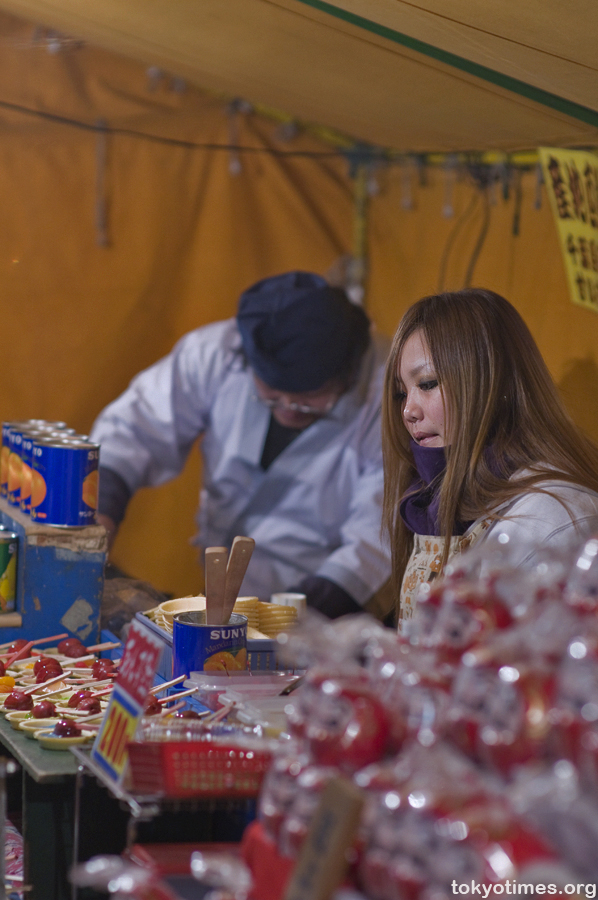
Thus allowing for arguably the most favoured part of most Japanese festivities, the food, which invariably comes from a fascinatingly varied selection of vendors, serving up equally varied victuals.
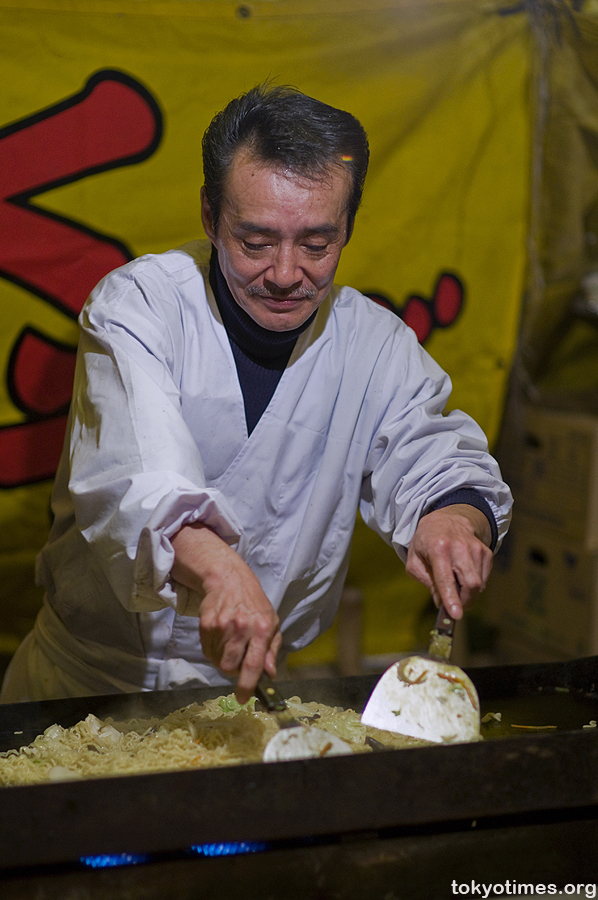
All the way from the savoury,

to the sweet.
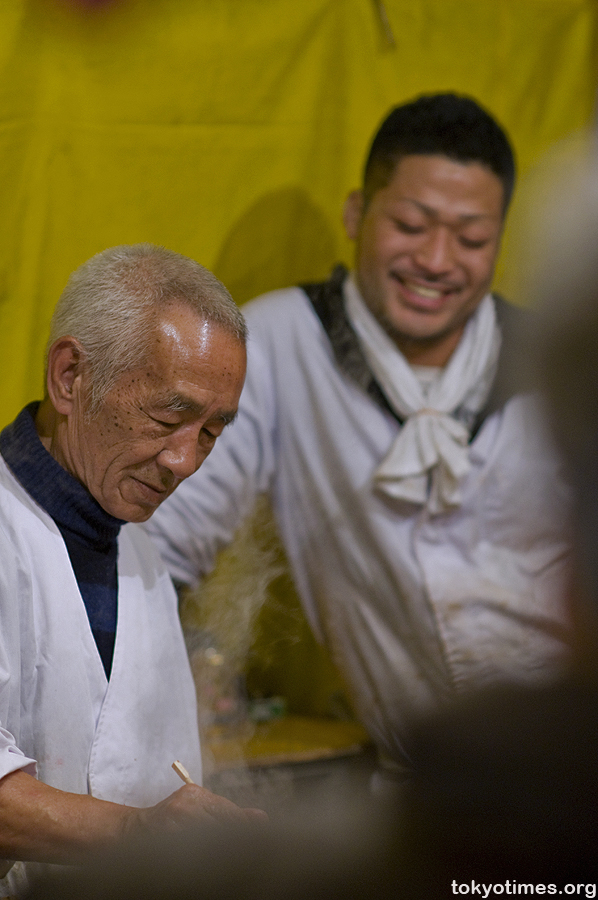
Plus, for a bit of continuity, below are a couple of the same characters from last year, although one of them seemed decidedly dejected about the new decade.
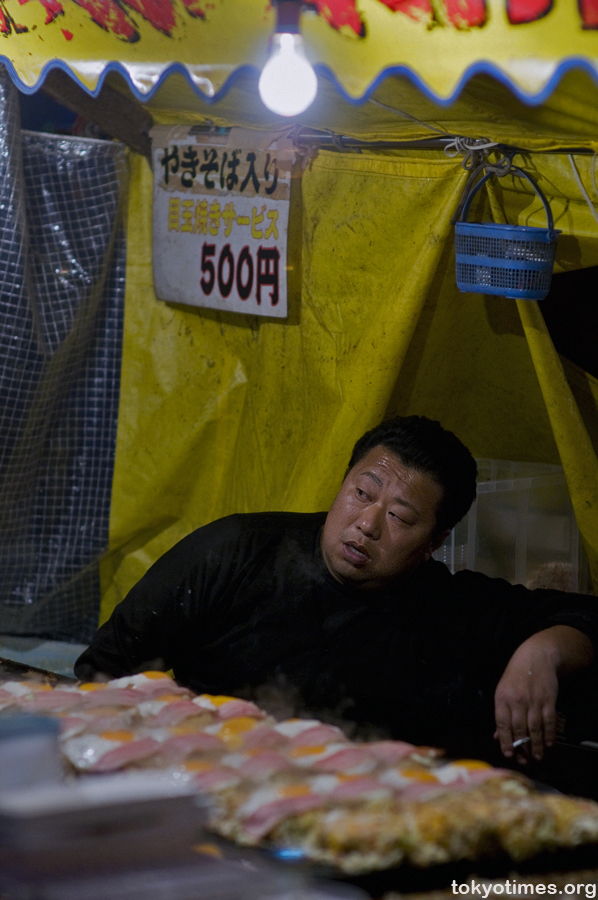
And cooking with what appears to be his replacement, this still spritely old fella could well be tackling 2010 as a retiree.