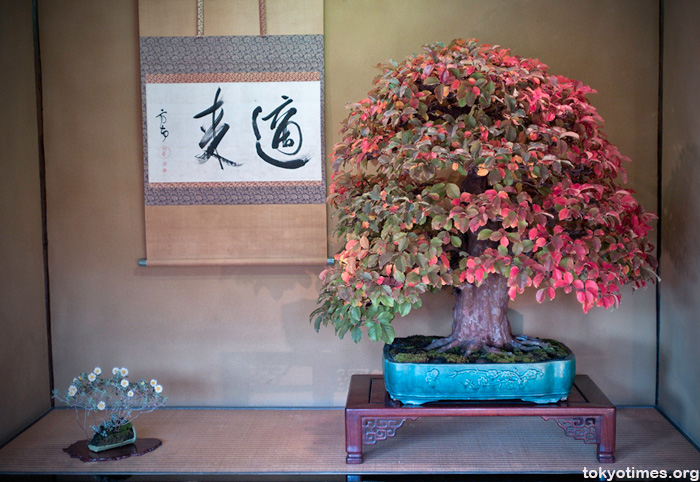
A suitably coloured bonsai, in an alcove that also boasts a kanji-emblazoned scroll, makes this scene both traditionally Japanese and autumnal. Plus, of course, fantastically pleasing on the eye.
Photographs from a small group of islands
A suitably coloured bonsai, in an alcove that also boasts a kanji-emblazoned scroll, makes this scene both traditionally Japanese and autumnal. Plus, of course, fantastically pleasing on the eye.
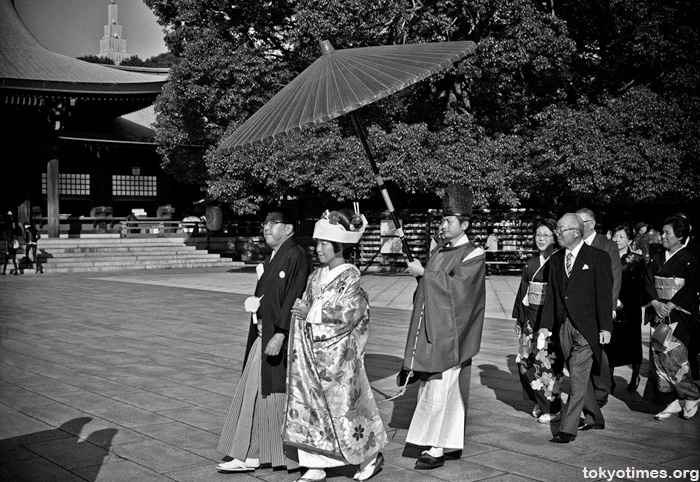
Western-style weddings conducted in recreated chapels and churches are incredibly common in modern Japan, but traditional Shinto affairs can still be seen — there’s just less call for them that’s all. And there’s arguably nowhere better to see one than at Tokyo’s Meiji Jingu. Scenes of which, apart from the odd giveaway, could quite easily have been taken years ago, rather than just yesterday.
The tsunami of March 11 that destroyed lives, property and whole communities obviously got a huge amount of media coverage. In fact including all the amateur footage, it must be the most photographed and filmed natural disaster the world has ever seen.
What then happened at the Fukushima Daiichi nuclear power plant, however, quickly usurped the horrors of the tsunami in the eyes of the press — as do its on-going and related issues. Yet that’s despite things being far from normal in many of Tohoku’s devastated towns and cities, as what remains is still a problem of enormous proportions; a mere fraction of which is clearly visible in these photographs taken a full eight months after the earthquake hit the region.
This unbalanced view quite understandably upsets many people, and as communities try to somehow rebuild, the last thing they need is to be forgotten — or possibly even worse, ignored. But at the same time, forgetting about the dangers of radiation exposure is clearly not an option for those living near the exclusion zone either.
Just like the situation further north, this latter issue is impossible to fully grasp from the safety of Tokyo. Reading about it and debating which region’s vegetables to buy is one thing, but living with the very real fear of what the future may bring is something else altogether. So to get at least some sense of what it’s like, the only option is to travel to the region and get as close as is feasibly possible to the problem: one of the exclusion zone checkpoints.
Driving down a busy road towards Minami Soma with shops and the like on either side is initially very deceptive. Slowly but surely, however, shutters begin to appear on a lot of the buildings, and one by one the cars turn off. Then, in the middle of a deserted road, the checkpoint finally appears — the sight of which is difficult to describe, but it’s somehow like reaching the end of the world. Basically the end of the road in more ways than one.
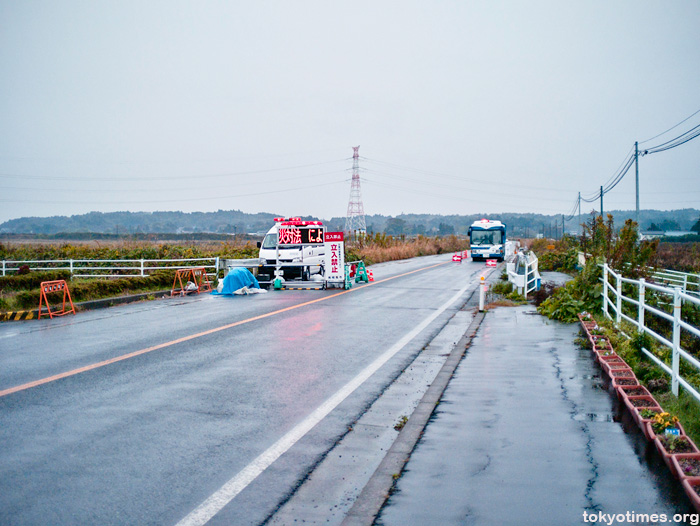
And the surreal nature of the place is only added to by a semi-lit but strangely still open convenience store very close by. One, needless to say, without any customers, and staffed by a solitary, as well as understandably dejected-looking, shop assistant.
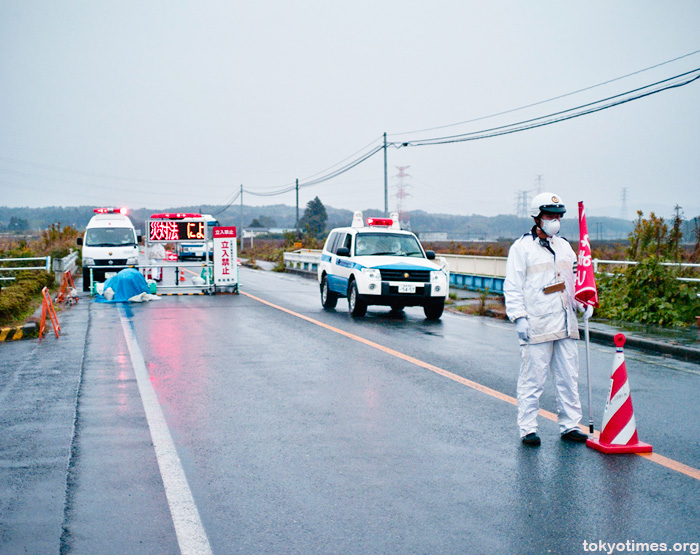
Yet like many roadblocks in Japan, the checkpoint itself is reassuringly manned by a flag waving individual who is very keen on letting travellers know where they may go, and more importantly in this case, where they may not. That said, it is hard to ignore the fact that masks are actually part of the uniform. Plus they are designed to protect those wearing them from something far more malignant than pollen.
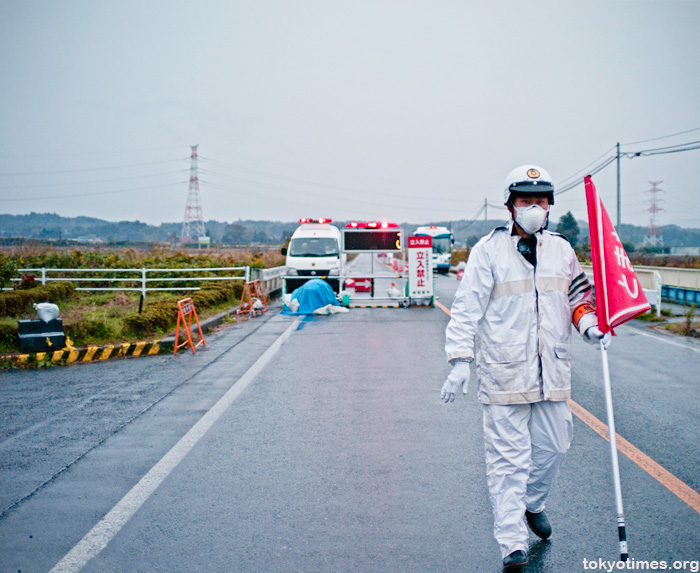
The sight of that very same man waving through a reasonably steady stream of vehicles containing people covered head to toe in white protective clothing, on the other hand, made everything feel much more real. And at the same time, utterly unreal.
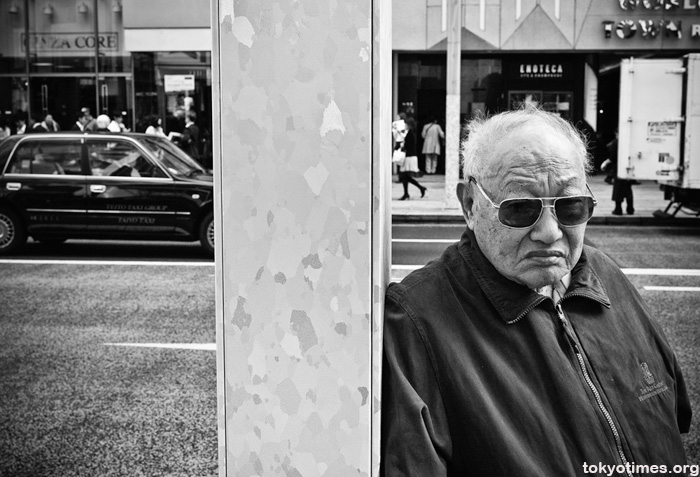
Okay, so admittedly it’s pretty unlikely that this old fella participates in organised crime for a living, but while impatiently waiting for his wife to finish shopping, he arguably did have the demeanour of someone who does.
Eight months after the earthquake and tsunami devastated Japan’s Tohoku region, conditions have obviously improved, and in those locations not directly hit by the disaster, life has mostly returned to normal. Or at least a new, post-earthquake version of normal.
In those ports and towns that bore the horrible brunt of the tsunami, however, it’s a very different story altogether. The area affected is so large, and the destruction so all-encompassing, that the clean-up, while well underway, is a task that is clearly going to take an awfully long time to complete. And in Kesennuma, this aspect is painfully clear.
Along the outer areas of tsunami damage, some businesses have started to operate again, and people once more pass through on their way to work or school.
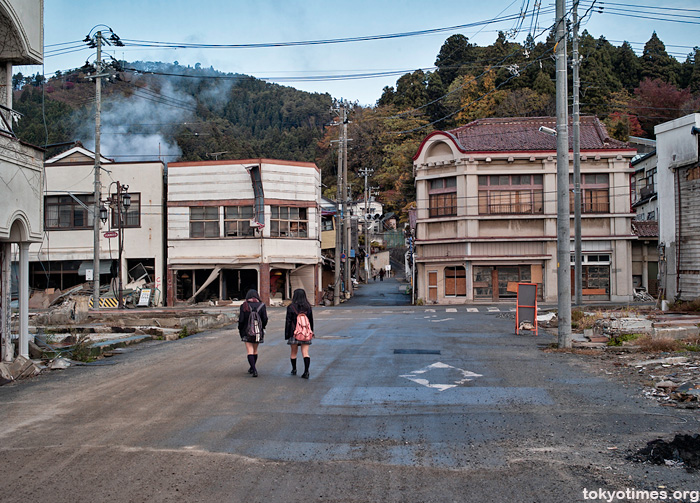
But nearer the sea, it’s still a completely different scene. A truly shocking landscape that the relative silence and stench of stagnant water pools only add to.
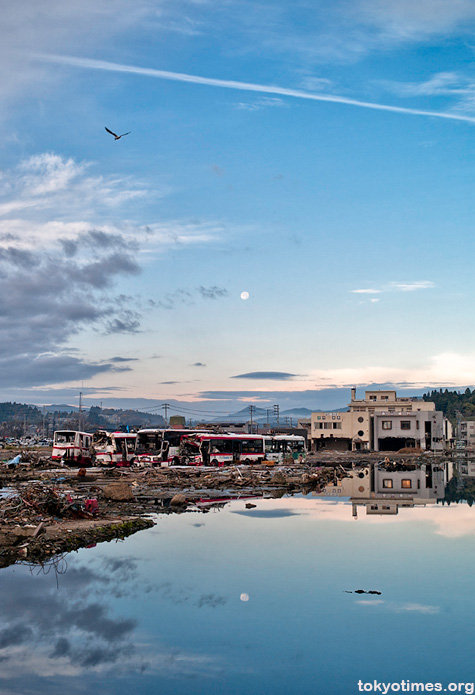
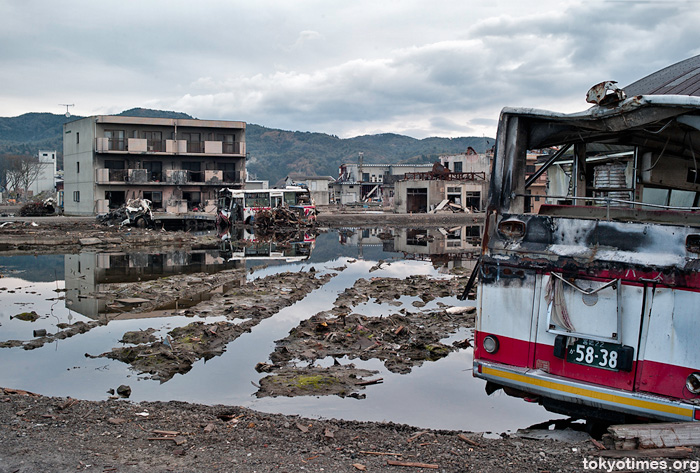
Temporary roads mean trucks, diggers and the like can get in and out, but the sheer scale of the damage, and the massive expanse it covers, means that despite all that’s been achieved, there’s still so much more left to do.
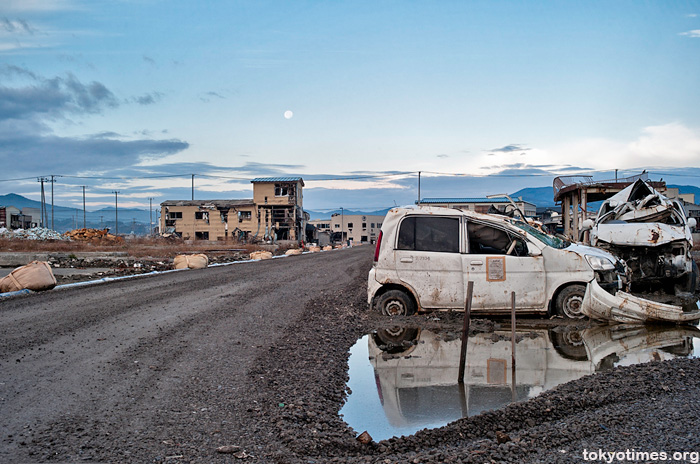
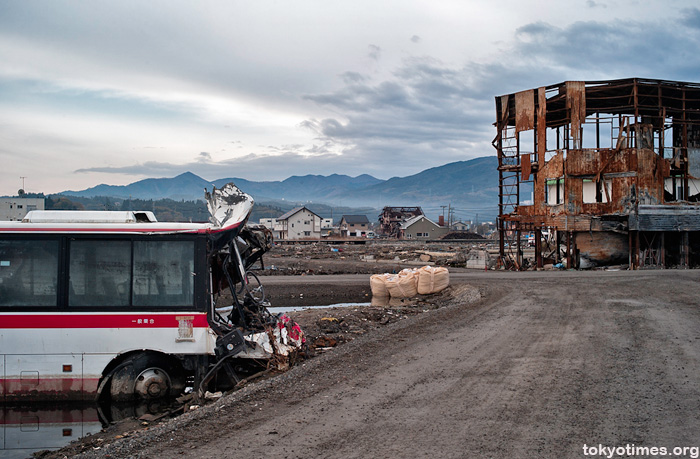
Yet until it is, a large part of the city remains a painful reminder of the forces that surround us, and, having spoken to several people who were caught up in the events of March 11, the random nature of what somehow survived, and what didn’t. Plus, far more disturbingly, the horrible decisions people had to make that very quickly resulted in their survival, or death.
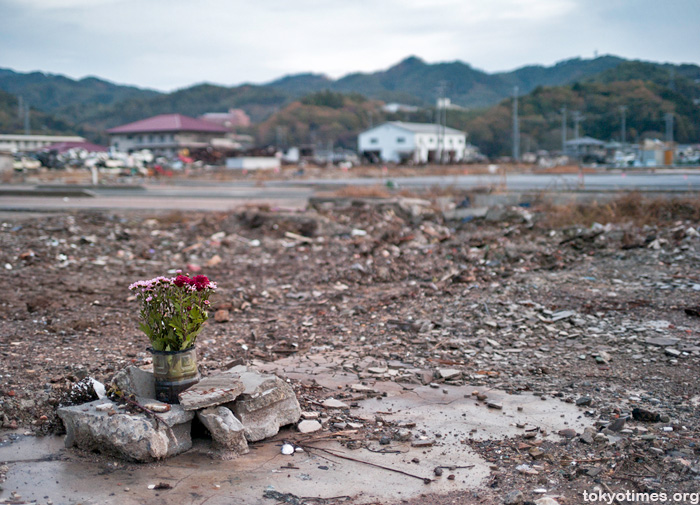
Provided, of course, that they even had the option of a decision. Many, it is clear, did not. Without transportation, or relative youth, it’s hard to imagine how some people could have covered the ground needed to reach safety.
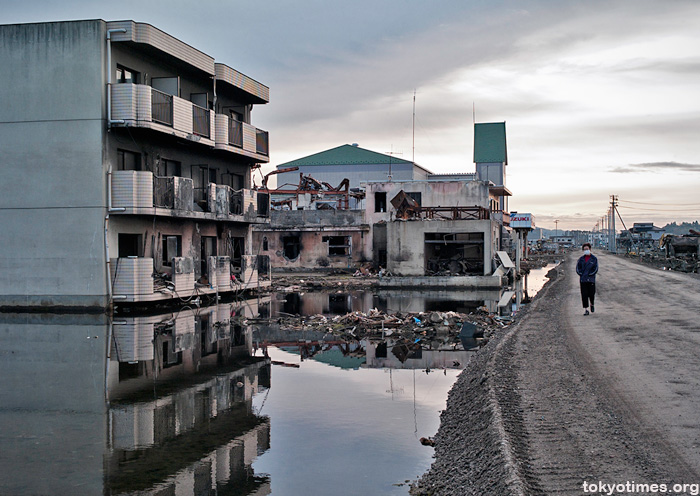
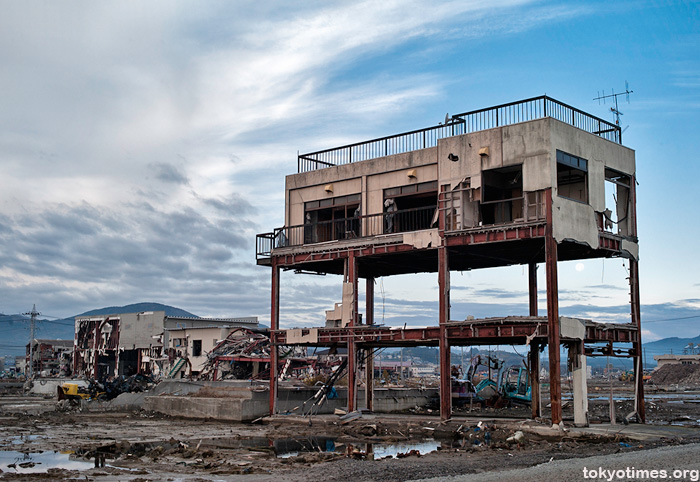
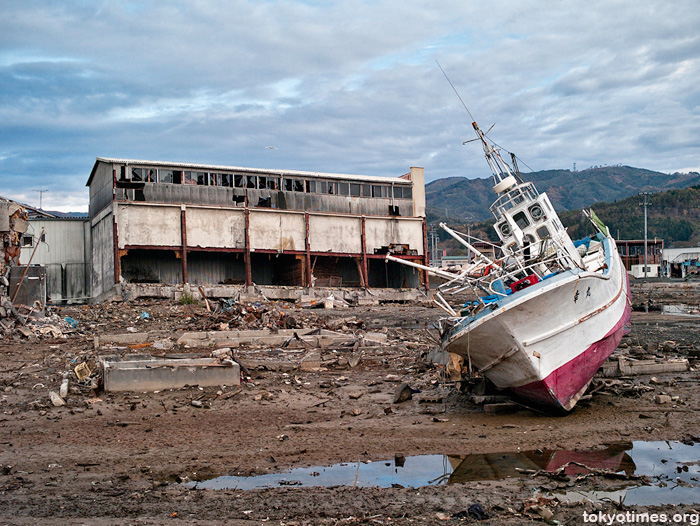
Especially so when considering the speed the waves came in, and the frankly astonishing force they produced.
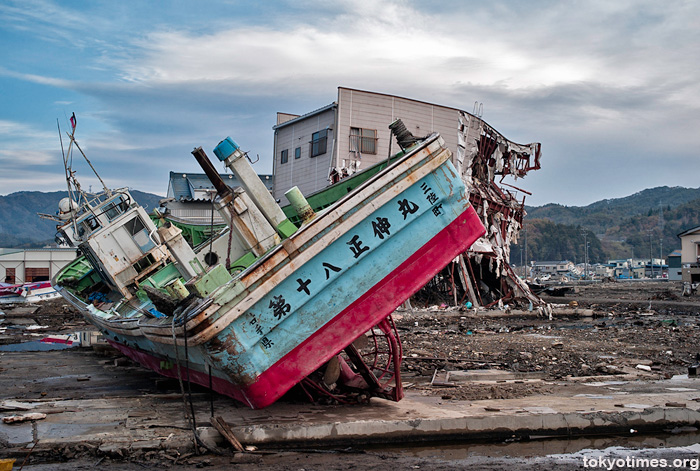
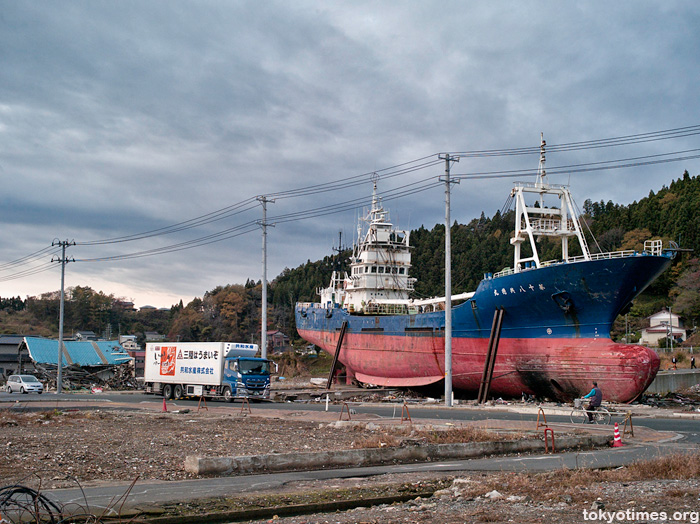
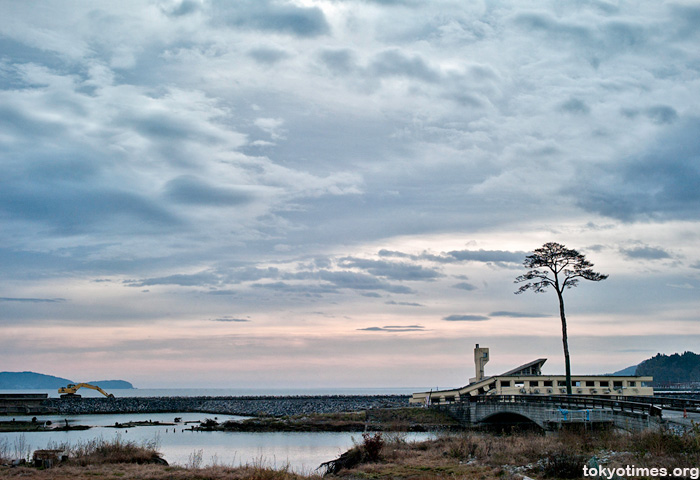
The horror of which is also visible slightly further north in Rikuzentakata, where there is now only a sense of what was. Land that once contained a city now has practically nothing to show but a solitary, and inexplicably untouched, tree; its presence as incomprehensible as everything else that happened on that fateful day eight months ago. The sight of which, even after seeing countless videos and photographs, was no preparation for what it’s really like.