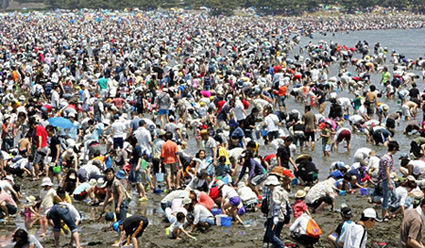
Holidays in Japan mean hordes of people everywhere, all the way from hiking paths to holy places; however when it comes to Yokohama’s muddy mix of sunshine and shellfish picking, they really know how to pack ’em in.
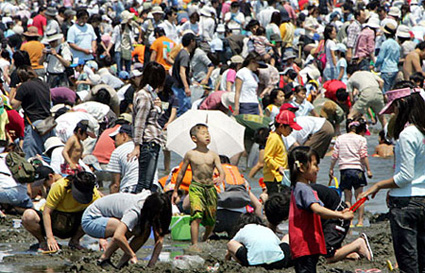
And then some.
Photographs from a small group of islands
Holidays in Japan mean hordes of people everywhere, all the way from hiking paths to holy places; however when it comes to Yokohama’s muddy mix of sunshine and shellfish picking, they really know how to pack ’em in.
And then some.
In a first for Tokyo Times, this idyllic interlude is actually topical, with it currently being Golden Week in Japan; a collection of national holidays crammed together to give the nation’s soldiering salary men a reasonably lengthy rest. But this being Japan, the days off definitely don’t work like dog years. Quite the opposite in fact, as the week-long holiday is actually only 3 weekdays – Tuesday and Wednesday having rather ridiculously been reverted to regular working days.
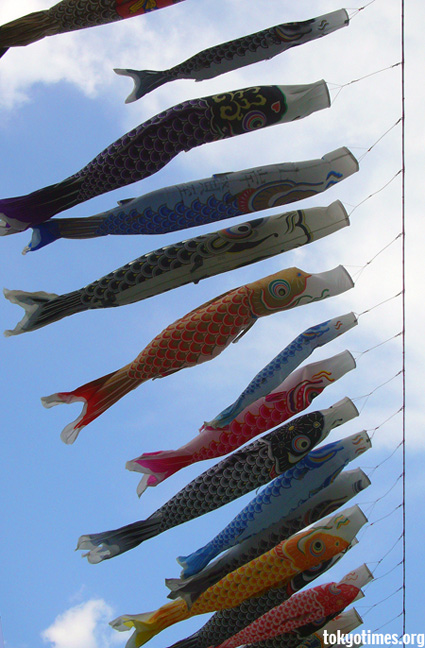
However regardless of the method behind such madness, tomorrow is Boys’ Day, which is designed to celebrate the health and well being of young males, with many people honouring the event by hanging out a few Koinobori like the ones below.

Instead of just sticking to a few though, some people in Sagamihara, Kanagawa Prefecture, have far more fluttering in the breeze.
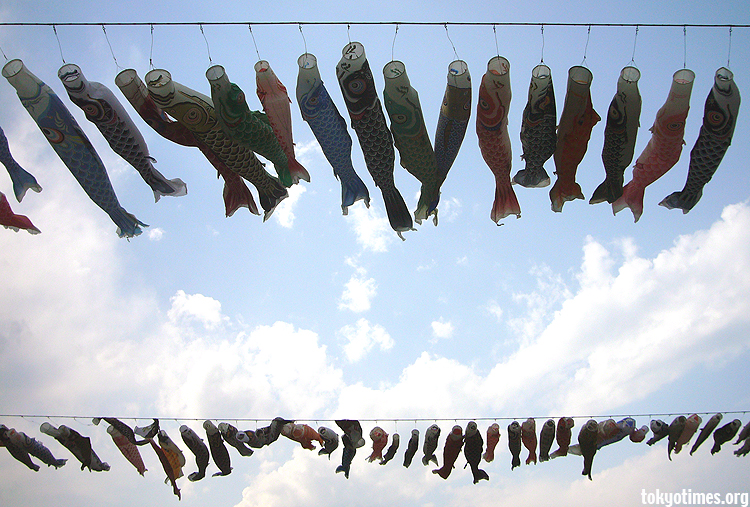
A Whopping 1,200 in fact, the majority of them apparently donated by people who perhaps due to a lack of space couldn’t otherwise display them.
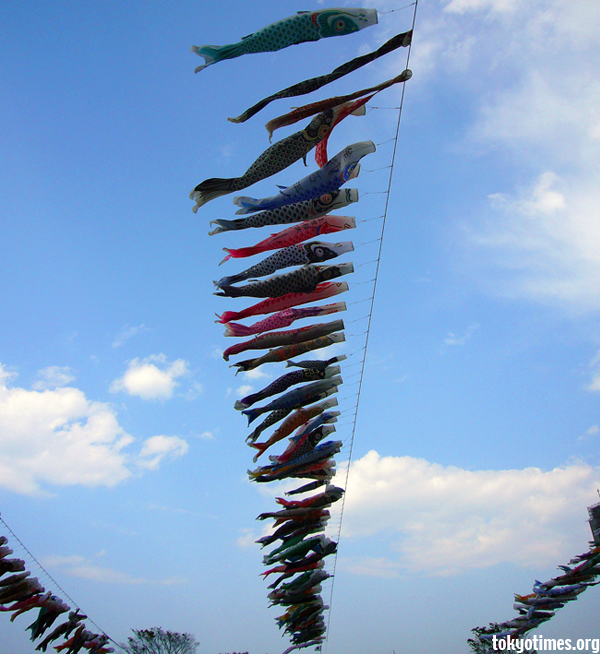
Which would suggest that apartment balconies are lacking in space almost as much as salary men are in regards to successive days off.
For fans somehow not content with the recent release of the Hello Kitty banana case, Japanese mobile phone operator SoftBank has teamed up with Sanrio to produce a series of limited edition feline phones, each one decorated with dozens of crystals to faithfully depict the deadpan deity’s rather featureless face.
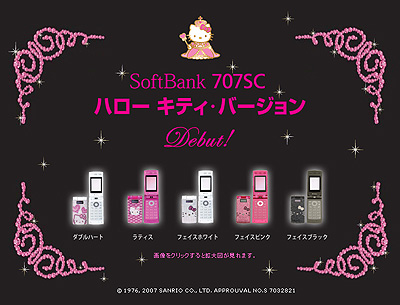
A set of cell phones that are touted as gorgeous, although tacky could well be more truthful.
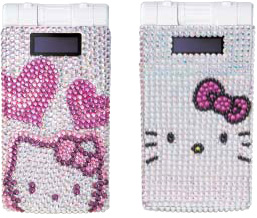
But either way, for those hoping to get their hands on such a prime piece of pussy, only 100 models of each design will be available, making them telephones to be treasured for the lucky few.
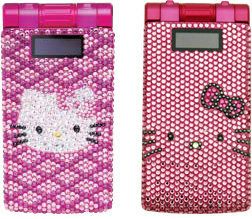
Or alternatively quickly traded online for a massive amount of money.
Whilst the Japanese may be a little lax when it comes to lovemaking, regularly languishing at the bottom of the nationality-based libido league table, it’s a different story altogether when it comes to latex love dolls. Technological advancements in manufacturing such silicone sirens making them more life-like than ever, which in turn has created an industry that includes rental services, a love doll love hotel of sorts, and even a magazine devoted to the topic.
Yet despite the cost of acquiring such a companion being somewhere around the 600,000 yen (2,500 pound) mark, it’s a figure some people are prepared to pay. And for those willing to take the plunge, Japan’s plastic plaything pioneer, Orient Industries, has a showroom to display its wares.
A place where the ladies are seductively shown off in a variety of outfits, from the relatively refined,
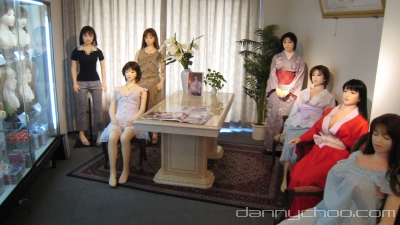
to the rather more risqué,

with the option of getting some head(s) a distinct possibility.
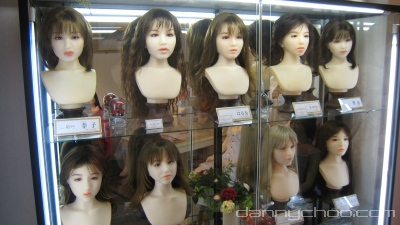
Considerably more unconventional than the usual kind of showroom it has to be said, and more saucy but sensibly censored shots can be found over at DannyChoo.com, along with a much more detailed description about the dolls and the display.
For people partial to a few pints of beer now and again, Japan is by no means a bad place to be, as along with numerous regular and really rather good lagers, there are also plenty of cheaper options for those whose wallets aren’t quite as bulging as their bellies.
Low malt ‘beers’ (happoshu) for example are saddled with less tax, creating a drink that is almost beer but at a better price. And with an alcohol content usually around the 5.5 percent mark, any issues surrounding taste are often quickly forgotten. Plus for those who don’t miss malt at all, there’s a third alternative, rather appropriately named ‘third beer’ — a process that uses pea or soy protein to produce an even cheaper beer-like brew.
All in all it’s combination that has seen beer (and beer-like) beverages account for almost two thirds of Japan’s alcohol intake, whilst the nation’s traditional drink of sake has slumped to a seriously sober 8 percent of the market.
Price however is perhaps not the only factor, as beer makers it has to be said really know how to push their products. A bikini-clad and lager loving young Japanese lady for example is the perfect promotional tool, as after one or two too many, confidence is increased, and maybe,

just maybe,

such a busty young beauty would simply be unable to resist a randy fella who is a little rotund and red-faced.

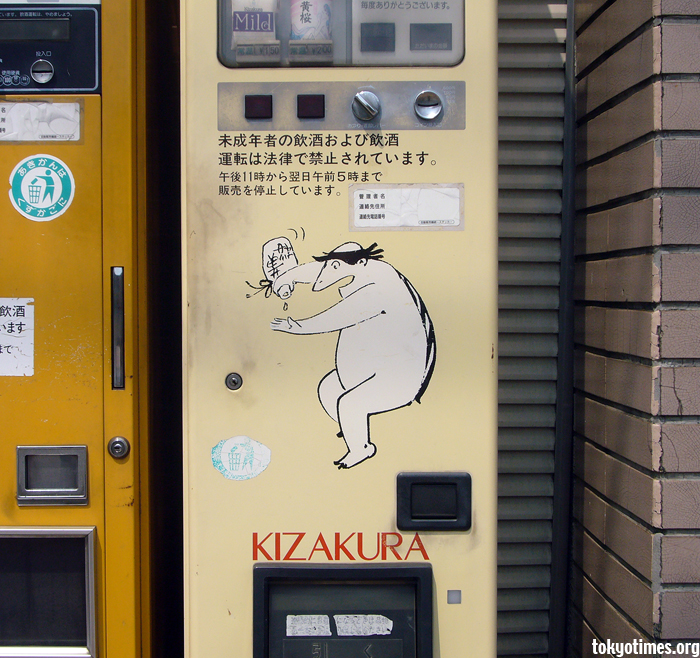
Sake manufacturers on the other hand have managed to make a real mess of their marketing, and instead of giving drinkers something to dream about, they have inexplicably opted to offer boozers a painful picture of what they may well become.
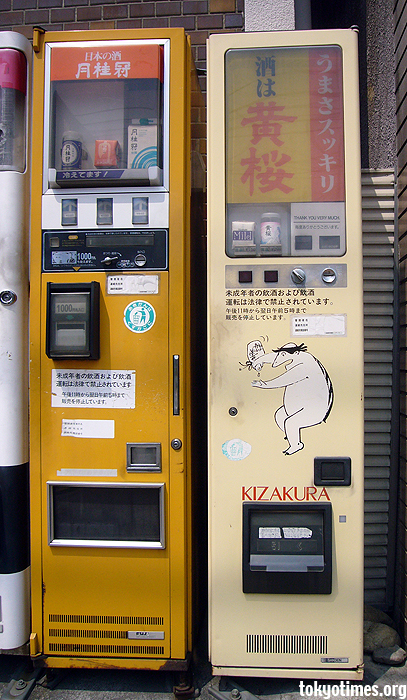
Namely naked, neanderthalic and maybe even nuts.